
Calibration Gases for Environmental Monitoring and Emissions Testing
A CEMS on a Texas boiler or turbine checks itself against a known gas every day. That emissions calibration gas has to suit the analyzer and the method, and for most federal programs it has to meet EPA’s protocol rules too. As a calibration gas supplier, Southwest Gases confirms which grade your program allows before we quote.
Why Calibration Gases Matter in Environmental Monitoring
An emissions analyzer reports a number that can end up in a permit report. You only know that number is right if the analyzer was checked against a gas of known, traceable concentration. If that reference is off, reported emissions are off by about the same proportion. The right standard depends on your program, analyzer, and method.
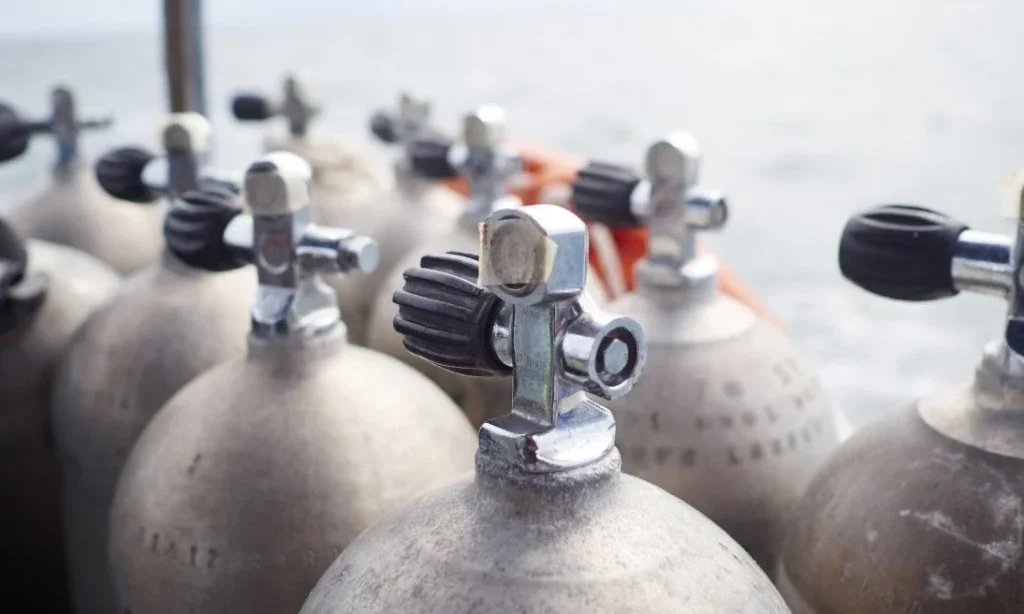
Applications of Calibration Gases
Continuous Emissions Monitoring Systems (CEMS)
CEMS run a daily zero and span check, and Part 75 units add quarterly linearity checks at three levels. Federal programs usually require EPA Protocol Gas as CEMS calibration gas.
Stack Emissions Testing
Stack testers using EPA instrumental methods, like Method 7E for NOx, need calibration gases for emissions testing at three levels, with the mid gas at 40 to 60% of span.
Ambient Air-Quality Monitoring
Ambient air monitoring calibration gas is a concentrated protocol gas. A dilution calibrator mixes it with zero air down to ppb levels, so air quality calibration gas and zero air are ordered together.
Environmental Testing Laboratories
Labs analyzing canister or bag samples need gas mixtures for environmental testing that match their target compounds, plus a clean zero gas for blanks.
How to Choose the Right Gas for Emissions Testing
Your permit, monitoring plan or test method spells out most of this. Send us:
- Target gas, concentration and balance gas
- Analyzer make, model and span
- The rule or method, such as Part 60, Part 75, Method 7E or a state permit condition
- Certification level (EPA Protocol, NIST-traceable or certified standard)
- Cylinder size, quantity and delivery site
Plan ahead. EPA Protocol cylinders can take about a month to arrive, so reorder well before the current one expires.
Calibration Gas Mixtures for Environmental Monitoring
The right gas depends on the analyte, the analyzer range and the method. These are the usual gas calibration standards for emissions and air-quality work. We confirm availability for your grade and certification before quoting.
| Gas Standard | Typical Use | Worth Knowing |
|---|---|---|
| SO2 calibration gas | Boilers, refinery heaters, sulfur recovery units | Reactive, so its EPA certification period is shorter than CO's |
| NO calibration gas | NOx analyzers on turbines, boilers and engines | Balanced in nitrogen, because NO reacts with oxygen |
| NOx calibration gas (NO2) | Converter checks on NOx analyzers | Method 7E requires at least 90% conversion |
| CO calibration gas | Turbines, engines, flares | Stable; EPA certifies CO in air for up to 8 years |
| CO2 calibration gas and O2 standards | Diluent monitors used to correct emissions to a reference O2 or CO2 level | Often blended with NO or CO in one cylinder |
| Zero air and zero gases | Zero checks, dilution calibrators, lab blanks | Some analyzers zero on UHP nitrogen; ambient analyzers usually need zero air |
Why Environmental Teams Choose Southwest Gases
We check what your program requires before we quote, including whether a gas has to come from a PGVP producer. Your zero gas and UHP nitrogen can come from the same emissions monitoring gas supplier as your standards. We’re in Flower Mound and deliver across Dallas, Fort Worth, Houston, Austin, and San Antonio.
Calibration Gas Quality and Documentation
Read the certificate before you order. It should list each component’s certified concentration and uncertainty, the balance gas, the cylinder number and the expiration date. Ask for the SDS too. EPA Protocol Gases carry one more condition: the producer must take part in EPA’s Protocol Gas Verification Program (PGVP), which buys cylinders and audits them.
| Comparison | EPA Protocol Gas | Other Certified Standard |
|---|---|---|
| Certified By | A PGVP producer, under EPA's Traceability Protocol | The producer, under its own procedure |
| Accuracy | Within 2.0% of the label for Acid Rain Program (Part 75) use | As stated on the certificate |
| Usually Required For | Part 75 CEMS, EPA instrumental test methods, regulatory ambient monitoring | Lab work, process analyzers, non-regulatory checks |
| Certification Period | Set by EPA per gas, such as 4 years for SO2 at 1 to 50 ppm | Set by the producer |
Request a Quote for Environmental Calibration Gases
Environmental labs, plant environmental teams, stack testers and monitoring contractors can all start the same way. Send your analyzer, span, method and certification level, plus the expiration date on your current cylinder. We'll confirm what we can supply and send a quote.
Frequently Asked Questions
It’s a cylinder with a certified concentration of a pollutant or diluent gas, like NO, SO2, CO or O2. Facilities and testers use it to check and calibrate emissions analyzers.
It’s used for daily zero and span checks, plus the periodic linearity and audit tests that show the CEMS still reads correctly.
Sulfur dioxide calibration gas, NO and NOx standards, and carbon monoxide calibration gas cover most pollutant analyzers. O2 and CO2 standards calibrate the diluent monitors, and zero gas gives the analyzer its true zero.
Any gas with a certified concentration can be a calibration gas. An EPA Protocol Gas is certified under EPA’s Traceability Protocol by a PGVP producer, which most federal emissions and ambient programs require.
We need the gas, concentration, balance gas, analyzer span, the rule or method, and the certification level. Add cylinder size, quantity and delivery address.
Yes. Stations dilute protocol gas with zero air to reach ppb levels. NO2 is usually made on site by gas phase titration; EPA said in 2022 that NO2 cylinder mixtures can’t be used for regulatory ambient monitoring under Part 58.
Check the certificate (concentrations, uncertainty, cylinder number, expiration date and certification method) and the SDS. For Protocol Gas, confirm the producer appears in EPA’s PGVP listings.
We supply UHP nitrogen for zero and purge use, and we quote environmental calibration gas standards on request. We confirm each gas, grade and certification, including EPA Protocol status, before you order.
Yes. Our delivery area covers Dallas, Fort Worth, Houston, Austin and San Antonio. For plants or stations elsewhere in Texas, ask and we’ll tell you whether we can reach the site.