
Specialty Gases for Semiconductor Manufacturing in Texas
High-Purity Specialty Gas Supply for Wafer Fabrication, Electronics Manufacturing & Cleanroom Operations
Southwest Gases supplies ultra-high-purity gases and mixtures to semiconductor and electronics manufacturers across Texas. UHP nitrogen, argon, helium, hydrogen and CO2 at grades to 6N, plus forming gas blends, calibration mixtures and analytical support gases, with a certificate of analysis on every lot.
Trust indicators
- Ultra High Purity Gases
- Semiconductor Industry Support
- Reliable Delivery Scheduling
- Texas Technical Support
Why Specialty Gases Are Critical to Semiconductor Manufacturing
A fab consumes far more inert gas than process chemistry. Nitrogen alone usually outweighs every reactive gas in the building combined, because it purges tools, blankets load locks, carries other gases and holds atmosphere in equipment between runs.
That volume is why purity carries so much weight here. At 6N the total impurity ceiling is 1 ppm, and advanced-node specifications tighten the individual limits well below it. A purge gas carrying trace oxygen or moisture delivers contamination into the tool it was meant to protect, and it does that on every cycle rather than once.
We supply semiconductor fabs, electronics manufacturing plants, photonics and MEMS manufacturers, cleanroom research centers and advanced packaging facilities across Texas.
Common Specialty Gas Applications in Semiconductor Facilities
Wafer Fabrication
The two gases that move in the largest volume across a fab are nitrogen and argon. Nitrogen purges and blankets. Argon works as a sputter gas, a process gas and an inert carrier, and both hold atmosphere in tools and transfer chambers between wafers. Because that duty is continuous rather than per-wafer, it becomes a supply planning problem more than a process chemistry problem. We supply UHP nitrogen and argon in cylinders, packs and bulk with a certificate of analysis per lot.
Thin Film Deposition
CVD and PECVD chemistry comes from the reactive precursors, but the gases around it hold the process steady. Nitrogen and argon serve as dilutants and carriers, hydrogen appears as a reducing agent in some films, and purge cycles between depositions clear residual chemistry before the next wafer enters. The silane and ammonia class precursors are supplied by the primary manufacturers who synthesize them. The UHP carrier, dilutant and purge side is where we fit.
Etching Processes
Etch chemistry is fluorinated and corrosive and comes from the specialty manufacturers licensed to produce it. What surrounds it is a large and steady inert load: argon as the physical sputter component in reactive ion etch, nitrogen purging the chamber and gas panel between recipes, and dilution gas feeding abatement on the exhaust side. That surrounding load is usually the larger volume and it is the side we supply.
Cleanroom Purging & Inerting
Purge and inerting is the highest-volume gas duty in most facilities. Load locks, transfer chambers, gas panels, wet benches and storage cabinets run on nitrogen, and the objective is to hold oxygen and moisture down rather than to react with anything. Forming gas, hydrogen blended into nitrogen at typically 4 or 5 percent, covers anneal and sinter steps that need a reducing atmosphere. Both are scheduled high-volume purchases rather than occasional orders.
Analytical & Metrology Equipment
The metrology and analytical lab attached to a fab runs its own gas list: carrier gas for GC and GC-MS, collision cell gas for ICP-MS, purge gas for FTIR and optical benches, and calibration mixtures for the detection systems monitoring the subfab. Calibration gas is the one that gets overlooked until an audit, since detector spans drift and cylinders carry expiry dates. Our helium for laboratory equipment page covers the analytical instrument side in detail.
Research & Development
Process development groups, university cleanrooms and pilot lines buy across a wide range of grades in small quantities, which usually means more line items and less volume behind each one. That order profile suits a distributor better than a national contract does. We hold UHP cylinders in stock across the common grades so a development run is not waiting on a minimum order quantity.
Reliable Specialty Gas Supply Backed by Local Texas Support
There is a boundary here worth being direct about. Hydride and corrosive process chemistry, meaning silane, arsine, phosphine, chlorine, HBr, WF6 and the fluorinated etchants, comes from the handful of primary manufacturers who synthesize it and run the hazmat response infrastructure that goes with it. We do not supply those, and it is a fair question to put to any supplier who says they do.
What we do supply is the other half of the fab gas list, which is the larger half by volume: UHP nitrogen, argon, helium, hydrogen, oxygen and CO2, forming gas and custom non-hazardous mixtures, clean dry air, and calibration and span gases. Practically, that means one account covering the whole non-hazardous list rather than a separate vendor per gas, certificates of analysis assembled per lot for qualification files, and delivery on our own fleet with 24/7 emergency dispatch. Scheduled accounts hold priority allocation when supply tightens. Southwest Gases has been supplying Texas industry for over 30 years, and accounts stay with one specialist.
Specialty Gas Supply Solutions for Semiconductor Facilities
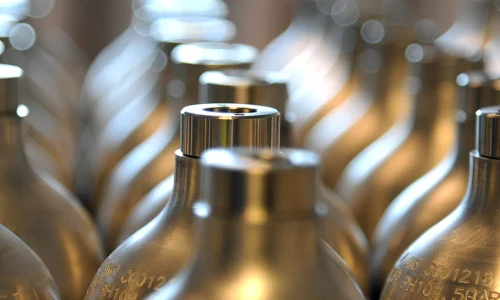
High-Purity Specialty Gas Cylinders
Cylinders and packs cover tool-level supply, metrology laboratories and pilot production. Grades run from 4.8 through 6N depending on the duty, and the connection deserves as much attention as the gas: specify VCR face-seal fittings and a purge panel at the point of use. Plan the changeout procedure as well, since a cylinder swap without a proper purge cycle can undo the grade you paid for.
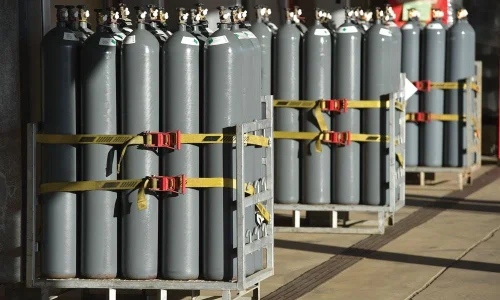
Bulk & Centralized Gas Systems
In most facilities only two or three gases justify bulk, and they are almost always nitrogen and argon. Those go into liquid vessels with vaporization feeding a centralized loop, while the rest of the list stays on packs. Working out where that crossover falls is the whole exercise, because putting a gas on bulk below its crossover volume costs more than leaving it on cylinders.
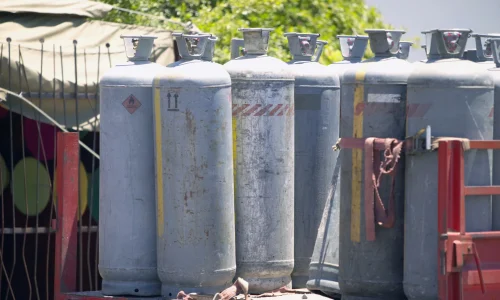
Scheduled Delivery Programs
A mixed gas list makes scheduling harder than a single-product account, since each gas moves at its own rate and they rarely empty together. We consolidate the list onto one delivery day where volumes allow it and split the rest across the route. Facilities running multiple buildings can hold a single agreement with cylinders tracked per building.
Serving Semiconductor Manufacturing Facilities Across Texas
We deliver specialty and ultra-high-purity gases to semiconductor and electronics facilities across Austin, Round Rock, Dallas, Fort Worth, Plano, Richardson, Houston and San Antonio.
That footprint covers the Central Texas semiconductor corridor along I-35 and the North Texas electronics and analog manufacturing base. Most of the volume on these routes does not go to fabs at all. It goes to equipment manufacturers, subfab and gas system contractors, packaging and test houses, PCB and electronics assembly plants, photonics and MEMS producers, and university cleanrooms.
Get a Reliable Specialty Gas Supply Partner for Your Semiconductor Facility
Certified ultra-high-purity gases, forming gas blends and calibration mixtures, sized to your tool count and ramp plan, with technical support across Texas. Call 214-432-6583 or email sales@southwestgases.com.
Frequently Asked Questions
The term covers two quite different groups. The first is electronic specialty gases: hydrides, corrosives and fluorinated etchants such as silane, arsine, chlorine and tungsten hexafluoride, supplied by the primary manufacturers who synthesize them. The second is ultra-high-purity atmospheric gases and mixtures: nitrogen, argon, helium, hydrogen, CO2, clean dry air, forming gas and calibration mixtures. The second group is far larger by volume, and it is the group we supply.
Because the gas contacts the wafer or the tool on every cycle. At 6N the total impurity ceiling is 1 ppm, and advanced-node specifications commonly set individual limits below 0.1 ppm for oxygen, moisture and hydrocarbons. Trace oxygen oxidizes exposed silicon and copper surfaces. Moisture affects photoresist adhesion and deposits on optical surfaces. A purge gas carrying either one delivers the contamination it was brought in to remove.
By volume, nitrogen and argon dominate, covering purge, blanket, sputter and carrier duty. Helium handles backside wafer cooling and leak testing. Hydrogen and forming gas blends appear in anneal and sinter steps. Rare gases matter at advanced nodes, with neon as the buffer in ArF excimer lithography lasers, krypton in KrF lasers at legacy nodes, and xenon in ion implantation and flash annealing. Reactive process chemistry runs through a separate supply chain.
Yes, within a defined scope. We supply ultra-high-purity nitrogen, argon, helium, hydrogen, oxygen and CO2 at grades to 6N, forming gas and custom non-hazardous mixtures, clean dry air, and calibration and span gases, each with a certificate of analysis per lot. We do not supply hydride, corrosive or fluorinated process chemistry, which comes from the primary manufacturers who synthesize it.
Yes. Scheduled delivery covers Austin, Round Rock, Dallas, Fort Worth, Plano, Richardson, Houston and San Antonio. For a mixed gas list we set one interval per gas from measured draw, then consolidate onto shared delivery days where the volumes line up. Telemetry on bulk accounts triggers replenishment by tank level, and scheduled accounts hold priority allocation during tight supply.
Analytical and testing laboratories, pharmaceutical and food QC, petrochemical and refining, aerospace, medical device manufacturing, and any operation running fixed gas detection that needs calibration mixtures. A fab metrology lab and an environmental testing lab buy much the same list at much the same grades, which is why the purity specifications and documentation carry across both.
Yes, and the starting point is a gas-by-gas consumption audit rather than one system design, because nitrogen, argon and specialty mixtures usually want different supply modes inside the same building. Bulk suits the two or three highest-volume gases. Everything else runs better on packs or cylinders with a manifold. We map that against your floor layout and ramp schedule, then quote the combination.
Yes. We run 24/7 emergency dispatch across Texas. Call 214-432-6583 with the gas, grade, connection type and volume, and we will confirm what we can move and when. Calibration gas and analytical carrier gas are the two that most often run out without warning, so both are worth holding a spare cylinder of.
Forming gas is hydrogen blended into nitrogen, most commonly at 4 or 5 percent, which keeps the mixture below the flammable limit while still giving a reducing atmosphere. In semiconductor and electronics manufacturing it covers alloy anneal and sinter steps, reduces oxide on metal surfaces, and serves as a buffer atmosphere in some laser anneal processes. It is a routine scheduled purchase rather than a specialty order, and volumes tend to be steady.
Neon, krypton and xenon, roughly in that order by volume at advanced nodes. Neon is the buffer gas in the ArF excimer lasers used for 193 nm lithography, which makes it the highest-volume rare gas in a leading-edge fab. Krypton fills the same role in KrF lasers at legacy nodes. Xenon is used in ion implantation, where its mass delivers controlled momentum without adding chemical doping, and in flash lamp annealing. Rare gas production has always come from a small number of sources, so these are worth contracting rather than buying on the spot market.