
Specialty Gases for Pharmaceutical and Biotechnology Research
A QC lab and a cell culture suite can share a building and still need very different gas. Southwest Gases supplies specialty gases for pharmaceutical research and biotech labs in Texas, including high-purity helium, nitrogen, and argon, CO2 for incubators, and liquid nitrogen. The right grade depends on your instrument or protocol, so that’s where we start.
Specialty Gases for Pharmaceutical Research
Specialty gases for drug development mostly end up in analytical instruments. Residual solvent testing under USP <467> runs on headspace GC with an FID. Elemental impurity testing runs on ICP-OES or ICP-MS, which use argon for the plasma. LC-MS uses a steady flow of nitrogen. Gases for pharmaceutical laboratories should match each method’s spec, plus any calibration gases the method calls for.
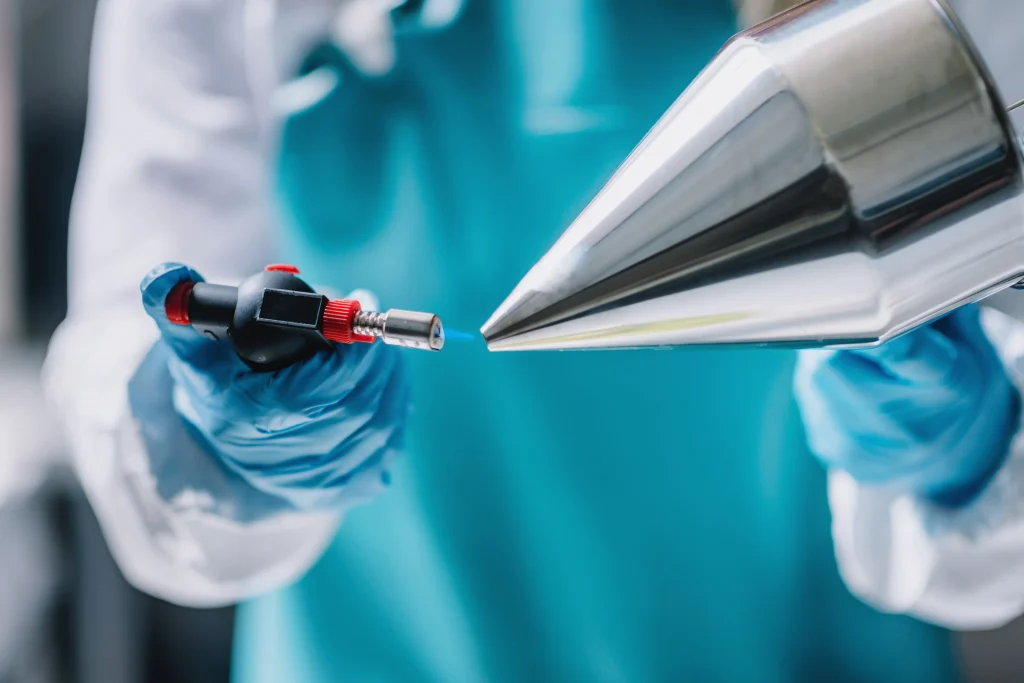
Gas Applications in Biotechnology Research
Gases for biotechnology research go into living systems as well as instruments.
Biotechnology and Life Sciences Laboratories
Specialty gases for life sciences cover the usual instrument gases, plus equipment like anaerobic chambers, which typically run on a nitrogen, hydrogen and CO2 blend.
Cell Culture and Bioprocess Research
Gases for cell culture start with CO2. Most incubators hold 5% CO2 to keep bicarbonate-buffered media at the right pH. Tri-gas incubators add nitrogen to push oxygen down for hypoxia work.
Bioreactor and Process Development Research
Bench bioreactors sparge air or oxygen to hold dissolved oxygen, and add CO2 to bring pH down. Nitrogen strips oxygen out or zeros the DO probe. At this scale, bioreactor gas supply is usually cylinders.
Research and Development Testing
Cell banks and samples go into liquid nitrogen freezers, often held in the vapor phase at minus 150°C or colder. R&D groups also use nitrogen for glove boxes and sample concentration.
Specialty Gas Supply for Pharmaceutical and Biotechnology Customers
For pharmaceutical laboratory gas supply, we deliver high purity gases for research in cylinders (helium, nitrogen, argon and CO2), plus liquid nitrogen, across Dallas, Fort Worth, Houston, Austin and San Antonio. Each delivery includes an SDS, with certificates of analysis on request. Our gases are sold for research and lab use. If one will touch a GMP manufacturing step, tell us first.
Types of Gases Used in Pharmaceutical and Biotechnology Research
These are the main research laboratory gases. Not every gas suits every protocol, so pick by what your equipment and method specify.
| Gas | Common research use | Related page |
|---|---|---|
| Helium | GC and GC-MS carrier gas | Helium |
| Nitrogen (compressed and liquid) | LC-MS, glove boxes, purging, cryostorage, tri-gas incubators | Nitrogen |
| Argon | ICP-OES and ICP-MS plasma | Argon |
| CO2 | Cell culture incubators, bioreactor pH control | CO2 |
| Calibration gases and reference mixtures | Checking analyzers and incubator CO2 sensors | Calibration Gases |
| Custom gas mixtures | Anaerobic or tri-gas blends, method-specific standards | Custom Gas Mixtures |
How to Choose the Right Gas for Research Applications
Gather these details before you ask for a quote:
- The method, protocol or instrument the gas is for
- The equipment maker's gas spec, including purity and impurity limits
- Composition and concentration for any mixture
- Cylinder type, monthly use and delivery address
- Certificates or traceability your QA team needs
A common mix-up with CO2 for cell culture is ordering a siphon (dip tube) cylinder. Siphon cylinders deliver liquid CO2, and incubators need gas. Ask for a standard cylinder.
Why Choose Southwest Gases?
Helium for GC-MS is a core product for us. Incubator CO2, liquid nitrogen and instrument gases can all sit on one account and arrive on one delivery. And as a Flower Mound-based biotechnology gas supplier, we’re a Texas team your lab manager can call directly.
Find the Right Specialty Gas for Your Research Application
Tell us the gas, purity and composition, the application, your monthly use, and the delivery address. We'll confirm the right product and send a quote.
Frequently Asked Questions
The most common pharmaceutical research gases are helium or nitrogen for GC, argon for ICP elemental testing, nitrogen for LC-MS, and calibration standards where a method calls for them. Research groups also use CO2 and liquid nitrogen for cell work.
Specialty gases for biotechnology start with CO2 for incubators and nitrogen for hypoxia work and cryostorage. Bioreactors add air or oxygen, and anaerobic chambers use a nitrogen, hydrogen, and CO2 blend.
As analytical gases for pharmaceutical testing, they carry samples through GC columns, sustain ICP plasmas, and feed LC-MS sources. Impurities can show up as noise or false peaks, which is why methods set minimum grades.
GC-MS usually runs on helium carrier gas, with hydrogen as an alternative, while LC-MS uses nitrogen. Carrier gases for pharmaceutical analysis are set by the validated method, so check it before switching.
Use the purity and impurity limits in your instrument manual or protocol. For trace work, moisture and oxygen limits matter as much as the headline percentage.
Yes. Anaerobic and tri-gas blends, for example, can be made to order. We’ll check that the mix is feasible and how long it takes, and the Custom Gas Mixtures page explains the process.
List the gas and grade, the application and equipment, the cylinder type, monthly use, and delivery address. Add any certificate needs.
Yes. We supply high-purity helium, nitrogen, argon, and CO2, plus liquid nitrogen, to labs in our five Texas metros. We don’t claim GMP or pharmaceutical-grade certification, and we’ll confirm what documentation each product comes with.