
One Restaurant, Multiple CO₂ Needs: Finding a Smarter Supply Approach
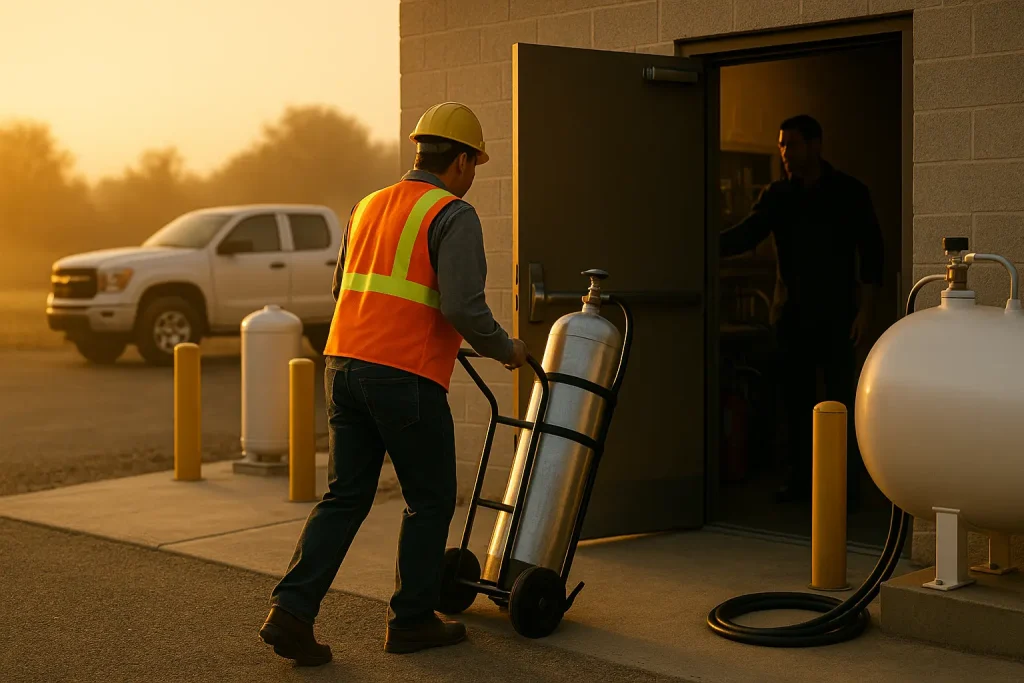
Helium Leak Detection: What Industrial Teams Need to Know Introduction: A tiny leak can create a major problem when a component needs to hold pressure, maintain a vacuum, or keep outside air from entering a sealed system. For these applications, helium leak detection offers a highly sensitive method for detecting leaks that may be difficult to identify with conventional testing. Helium is widely used as a tracer gas. It is chemically inert, non-flammable, and present in the atmosphere at only trace levels. Its small atomic size also allows it to move through very small leak paths. When paired with a helium mass spectrometer leak detector, it can help industrial teams identify and measure extremely small leaks. For businesses, however, successful helium leak testing depends on more than the detector. The test method, helium grade, cylinder supply, delivery schedule, and application requirements all matter. Why Is Helium Used for Leak Detection? Helium has several properties that make it well-suited to tracer-gas testing. First, helium is inert, so it does not readily react with the materials being tested. It is also non-flammable. Most importantly, normal atmospheric air contains only a small amount of helium, creating a relatively low background signal for sensitive detection equipment. Its small atomic size is another advantage. Helium can pass through very small openings that may not be easy to identify through visual inspection or conventional pressure testing. During a typical helium leak test, helium is introduced to or around the component being tested. A mass spectrometer leak detector then measures helium that passes through a leak path. Depending on the equipment and test configuration, the method can locate leaks or quantify their rate. What Is Helium Leak Testing Used For? Industrial helium leak detection is useful when equipment must maintain a high level of containment. Industries and applications can include: Aerospace components Semiconductor and electronics manufacturing HVAC and refrigeration equipment Components used in automotive Vacuum chambers Equipment used in processors Heat exchangers and condensers Medical devices Petrochemical systems Industrial process systems Agilent lists vacuum chambers, sealed devices, and power generation equipment as examples of applications where the sensitivity of helium leak detection can be helpful. Texas-based Southwest Gases delivers helium to aerospace, semiconductor, HVAC and refrigeration, automotive, medical-device, and petrochemical businesses throughout the state. The exact leak-rate requirement varies by product and application. A system designed for ordinary industrial service may have very different acceptance criteria from those for a semiconductor component or a sealed medical device. Helium Leak Detection Methods Can Vary There is no single test arrangement for every application. Some systems use a vacuum-based approach in which the test component is connected to a helium mass spectrometer leak detector. Other applications use a probe or “sniffer” approach to identify escaping helium around a pressurized component. Hood or enclosure methods can also be used for certain components and assemblies. The appropriate method depends on various factors, such as: Component size and design Required leak-rate sensitivity Whether the component can be evacuated Production volume Test cycle time Whether the goal is locating or measuring a leak Industrial teams should establish the required test method and acceptance limit before choosing their helium testing gas supply. What Helium Grade Does Leak Testing Require? The required helium purity depends on the application. Not all leak testing requires ultra-high-purity helium. For many industrial tracer-gas applications, an appropriate industrial grade will be sufficient. More demanding applications may require higher purity gas when helium is introduced into sensitive vacuum equipment, semiconductor systems, or components where contamination must be tightly controlled. Southwest Gases states that industrial-grade helium at 99.995% purity is sufficient for most tracer work, while higher grades may be appropriate when gas enters sensitive equipment or clean systems. The important point is to match gas quality to the test specification. Paying for a higher grade than the application requires may add cost without improving the measurement. Why Helium Supply Availability Matters A leak test is only useful if the testing operation can run when production requires it. A shortage of helium gas for leak detection can disrupt a production test cell, delay quality checks, or delay field-service work. This is particularly important for companies that perform testing continuously or have strict production schedules. Supply planning should consider actual helium consumption, cylinder size, test frequency, production volume, and expected changes in demand. For higher-volume operations, cylinder packs or other supply arrangements may reduce the need for frequent individual cylinder changes. Southwest Gases offers single cylinders, manifolded cylinder systems, scheduled delivery programs, and helium-nitrogen blends for industrial leak-detection applications. What Should Businesses Ask a Helium Supplier? Choosing a helium leak detection supplier should involve more than comparing the price of a cylinder. Industrial teams should ask: Is the helium grade appropriate for the test? The supplier should be able to explain the available purity grades and provide the documentation required for the application. Can supply match production demand? A supplier should be able to recommend cylinder quantities and delivery intervals based on actual consumption. Are alternative supply formats available? Cylinders, manifolded and bigger volume options could suit different operations. Can the supplier adjust to changes in demand? Helium needs can change rapidly due to production ramps, new test stations, and ad hoc projects. Is technical support available? A knowledgeable supplier can help businesses consider gas grade, supply format, and delivery requirements before a test program is disrupted. Helium Leak Detection in Texas Businesses searching for helium leak detection Texas should consider both testing requirements and local gas-supply logistics. Canadian operations may have different transportation, workplace, storage, and cylinder requirements depending on the province or territory and the application. The gas supplier should provide the applicable product documentation and cylinder information needed by the business. For companies operating across borders, it is also important to confirm that the helium grade, cylinder specifications, documentation, and delivery arrangements are suitable for the location where the testing will take place. Don’t Let Gas Supply
The Real ROI of Switching Bulk CO2 Suppliers
The Real ROI of Switching Bulk CO2 Suppliers Introduction: Most companies routinely review insurance policies, utility contracts, and equipment vendors. But one supplier relationship is usually left untouched for years: the bulk CO₂ supplier. Whether you own a brewery, food processing plant, beverage manufacturer, greenhouse, or restaurant chain, you need carbon dioxide for your day-to-day operations. But picking a supplier only on price can prove to be an expensive mistake. Delivery delays, sneaky contract fees, unreliable service, and unexpected downtime can cost a lot more than a few extra dollars a tonne. The real return on investment (ROI) of switching CO₂ suppliers often comes from operational improvements that extend well beyond the invoice. Why CO₂ Supply Has Become a Strategic Business Decision Carbon dioxide rarely receives much attention until its supply becomes a problem. That changed dramatically in recent years when maintenance shutdowns at ammonia and ethanol plants, weather disruptions, and transportation challenges affected CO₂ availability across North America. Since much commercial CO₂ is captured as a by-product of industrial processes, supply depends on several interconnected industries rather than standalone production. The Compressed Gas Association (CGA) provides industry guidance on the safe production, transportation, and handling of compressed gases, highlighting the importance of reliable supply practices throughout the distribution chain. Compressed Gas Association (CGA) For businesses that rely on continuous CO₂ usage, supplier reliability has become just as important as pricing. Looking Beyond the Price Per Delivery Many procurement teams naturally compare suppliers based on quoted prices. However, an effective CO₂ supplier comparison should evaluate the total cost of ownership rather than only the purchase price. A supplier offering slightly lower pricing may actually increase costs through: Late deliveries Emergency refill charges Equipment downtime Lost production hours Poor customer support Hidden contract fees These indirect costs can quickly outweigh small pricing differences. Where the Real ROI Comes From: Better Supply Chain Reliability You can avoid business interruptions with reliable deliveries. Whether you’re running a beverage bottling line or a restaurant serving hundreds of customers a day, consistent availability of CO₂ helps avoid production delays and protects revenue. A reliable supply chain also gives businesses greater confidence in planning operations around seasonal demand peaks. Improved Delivery Efficiency A reliable bulk CO₂ delivery schedule minimizes emergency orders and avoidable logistics costs. Route optimization, tank monitoring technology, and usage forecasting are commonly employed by today’s suppliers to improve delivery efficiency. Instead of reacting to shortages, businesses are replenished before the inventory dips to critical levels. That means less disruption and more predictable operations. More Transparent Contract Pricing Price transparency matters. Many businesses discover hidden costs only after signing long-term agreements. These are the following points to review for evaluating suppliers, which are as follows: Delivery charges Fuel surcharges Tank rental fees Emergency delivery costs Minimum volume commitments Contract pricing and renewal terms Transparent pricing of contracts can help businesses to estimate costs and prevent high charges. Operational Cost Savings Outweigh CO₂ Cost The biggest benefit in switching suppliers is often not in the purchasing department. Consider a beverage manufacturer that has to shut down production for just one day due to a late CO₂ delivery. The costs include the following: Idle production staff Delayed customer shipments Missed production targets Equipment restart expenses Customer dissatisfaction Preventing any interruption can help in operational savings over the course of a year. The Hidden Costs of Staying With the Wrong Supplier Many companies are not inclined to switch vendors, as changing suppliers can seem to be a time-consuming process. They often stay with the same provider even when service quality has declined because of existing contracts, equipment compatibility, and scheduling issues. But the price of inaction can be much higher. A supplier who is habitually late with deliveries can throw well-laid production plans out of the window. Plants might have to turn off equipment, change workers’ schedules, or postpone orders for customers. Restaurants and breweries can lose beverage sales during their peak hours, and food processors can suffer costly interruptions in packaging operations. These operational setbacks rarely show up as line items on a CO₂ invoice, but they do affect profitability. Poor communication is yet another hidden cost. In waiting for updates in an emergency or when customers can’t reach account managers, precious production time gets lost in waiting. In industries where continuous operations are important, every hour of downtime can cut productivity and increase operating costs. The contract’s flexibility should also be assessed. Business needs don’t often stay the same over the course of years. They may produce more, open new locations, or create new product lines, all of which increase CO₂ emissions. Such growth may be constrained by rigid contract terms or a supplier’s inability to deliver, forcing companies to renegotiate contracts or find alternative suppliers. This is why procurement teams are increasingly evaluating suppliers on their overall service performance, not just price. Things like on-time delivery, emergency response, customer support, and inventory planning are much better indicators of long-term value. Technology Is Changing Supplier Performance Today’s leading suppliers provide much more than deliveries. Many now offer: Monitoring remote tanks Scheduling auto-refilling Reporting inventories digitally Analyzing usage trends Preventive maintenance support These technologies improve supplier performance while helping customers better understand consumption patterns. The result is fewer emergency deliveries, improved inventory planning, and greater operational efficiency. Questions to Ask Before Switching CO₂ Suppliers Changing suppliers should involve more than requesting a quote. Ask prospective suppliers: What is your on-time delivery rate? How do you handle emergency deliveries? Do you have remote tank monitoring? What support equipment is provided? Hidden contract charges? Do delivery schedules scale as business increases? What industries are you working with now? Does Switching Make Financial Sense Businesses must consider the following when opting for a CO₂ supplier: Frequent delay in deliveries Poor communication Rising service fees Emergency support Capacity constraints Inconsistent availability Lack of proactive account management These challenges involve the volume of
What High-Volume Restaurants Look for in a CO₂ Partner
What High-Volume Restaurants Look for in a CO₂ Partner Introduction: When you walk into a busy restaurant on a Friday night, you’ll see servers rushing between tables, bartenders pouring draft beer, soft drink dispensers working nonstop, and kitchens operating at full speed. What most customers never notice is that many of these operations depend on one essential product: carbon dioxide (CO₂). CO₂ is used to power soda fountains. They help in keeping draft beer flowing. In addition, some commercial kitchens use it to help preserve food. For high-volume restaurants, even a momentary disruption to CO₂ supply can result in lost beverage sales, unhappy customers, and downtime. That’s why choosing the right CO₂ partner is not only about ordering petrol cylinders but also about business continuity. As restaurants continue to serve more customers and beverage sales remain a significant revenue source, finding a reliable restaurant CO₂ supplier has become a critical business decision. How the Right CO₂ Partner Improves Your Day-to-Day Operations In a high-volume restaurant, every minute of service is important. Beverage stations often pump out hundreds of drinks in a few hours during lunch and dinner rushes. If the CO₂ system goes down, staff waste valuable time troubleshooting the equipment instead of serving customers. Proactive service and inventory planning can help a good restaurant CO₂ supplier avoid these failures. Also, seasoned suppliers are more inclined to propose deliveries based on their historical consumption and seasonal demand, rather than waiting for restaurants to report empty cylinders or low bulk tank levels. Reliable suppliers also know that every restaurant works differently. A fast-food chain serving thousands of fountain drinks daily will have different CO₂ needs than a fine-dining restaurant with an extensive draft beer CO₂ list. Suppliers can review beverage sales, equipment capacity, and operating hours to recommend the most efficient CO₂ solution for each location. Also, suppliers often conduct periodic visual inspections of cylinders. It also includes inspecting other aspects such as regulators, valves, and delivery equipment during scheduled visits. Restaurants can avoid any kind of expensive downtime and emergency repairs by taking small problems into consideration. Why CO₂ Matters More Than Most Restaurant Owners Realize Carbon dioxide has been part of the food and beverage industry for well over a century. The first commercial soda fountains appeared in the late 1800s, while draft beer systems became increasingly common throughout the twentieth century. Today, virtually every modern restaurant serving fountain drinks or draft beverages depends on a steady CO₂ supply. The U.S. Food & Drug Administration regulates food-grade CO₂. This is used in food and beverage applications to ensure that it aligns with the safety and purity requirements. U.S. Food & Drug Administration – Food Ingredients & Packaging Restaurants require a proper and continuous supply of CO₂. Without which, they may experience: Flat soft drinks Poor-quality draft beer Interrupted beverage service Reduced customer satisfaction Lost daily revenue For busy restaurants, every hour without CO2 directly affects sales. What High-Volume Restaurants Expect from a CO₂ Partner Reliable CO₂ Delivery Consistency is the first priority. A dependable CO₂ delivery service ensures restaurants never run out during peak business hours. Reliable suppliers maintain scheduled deliveries while also monitoring customer usage patterns to recommend refill schedules before cylinders become empty. Many restaurants also prefer suppliers that can scale deliveries during holidays, sporting events, and seasonal demand spikes. Certified Food Grade CO₂ Restaurants cannot compromise on quality. Only certified food-grade CO₂ should be used in beverage systems. High-purity CO₂ helps preserve beverage taste, carbonation, and food safety standards. This becomes especially important for restaurants serving hundreds or thousands of beverages every day. Emergency CO₂ Support Even well-managed operations occasionally face unexpected situations. Equipment failures, unusually busy weekends, or delayed deliveries can quickly create shortages. Restaurants, therefore, value suppliers that offer emergency CO₂ delivery outside normal business hours. A rapid response minimizes downtime and prevents unnecessary revenue loss. Beverage Systems Depend on Consistent CO₂ Draft Beer Systems Restaurants with extensive beer selections rely on draft beer CO₂ to maintain proper serving pressure. Too much pressure makes flat beer. Too much pressure means too much foam, uneven pours, and wasted product. Proper management of CO₂ helps control beverage quality and reduce waste behind the bar. Soda Fountain Supplies Soda fountain CO₂ supplies are necessary to ensure restaurants are able to maintain a continuous availability of modern fountain dispensers to work. CO₂ provides carbonation and helps push syrup and water through dispensing systems. Any disruption has an immediate impact on the drink service. Since fountain drinks typically generate high profit margins, maintaining an uninterrupted CO₂ supply is essential for restaurant profitability. Bulk CO₂ or Cylinder Exchange? Growing restaurants eventually reach a decision between traditional cylinders and bulk CO₂ for restaurants. Smaller restaurants tend to benefit from the usage of cylinder exchange programs. Some of the top advantages include the following: Lower investment required upfront Simple replacement process Minimal storage requirements Flexible availability of inventory Bulk CO₂ storage systems are typical for larger restaurants, stadiums, hotels, and entertainment venues where continuous high-volume beverage operations must be supported. The best CO₂ partner guides you to identify which solution works for the current demand but also plans for future growth. What are the Benefits of Cylinder Exchange Programs A reliable cylinder exchange program takes care of so many operational issues. Instead of waiting for cylinders to be refilled, it is recommended for restaurants to receive tested cylinders during scheduled deliveries, ready to use. There are several advantages of this approach: Reduced downtime Improved safety Faster service Better inventory management Compliance with inspection requirements In the case of busy restaurants, it is imperative to exchange cylinders. It can often be far more efficient than managing refills independently Supply Reliability Has Become More Important Recent CO₂ shortages have demonstrated how vulnerable supply chains can become. Carbon dioxide is produced largely as a byproduct of industries such as ethanol production, ammonia manufacturing, and hydrogen
What Makes a Reliable CO₂ Service Partner for Multi-Location Restaurant Groups
What Makes a Reliable CO₂ Service Partner for Multi-Location Restaurant Groups Introduction: Managing CO₂ services for restaurants can be complex, especially when operating across multiple locations. While a single restaurant may require cylinder replacements occasionally and standard delivery scheduling, a multi-location restaurant will require centralized services. What they need is coordinated service, proper planning, and timely operational support across all the sites. Most restaurants’ operations depend on an uninterrupted CO₂ service. Any delay in delivery can impact customer experience, revenue generation, and beverage quality. Thus, for the operations team that manages several restaurants, choosing the right gas providers is more closely related to operational scalability than to basic delivery. A reliable emergency CO₂ service partner must improve visibility, simplify operations, and maintain a continuous supply of gas cylinders across locations. What Makes Multi-Location Restaurant Groups Require A Different Service Model? CO₂ is important for smooth beverage operations across restaurants. They are required for drafting beer systems, nitro beverage setups, carbonated beverage stations, and soda dispensing systems. Any interruptions in the multi-location restaurant gas supply can lead to customer dissatisfaction, disruptions in draft systems, flat beverages, and lost sales. This can amplify the issues, leading to greater losses and delays. In the case of multi-location restaurants, gas supply needs more centralized coordination. It will ensure that each location receives the same service, emergency response support, and reliable delivery. Consolidated Billing Simplifies Operations One operational challenge faced by multiple restaurant groups is managing invoices across multiple locations. Receiving different invoices from each restaurant creates unnecessary accounting issues. Herein, the operations and finance team spends most of their time tracking billing cycles and payment schedules, and managing service records. A reliable emergency CO₂ service for a restaurant will ensure that they get consolidated billing, which means: A centralized invoice Easy and simple accounting process Breakdown as per locations Allocation of internal cost This is important for restaurant groups to manage large portfolios. A centralized billing system will be convenient and ensure operational efficiency. Hence, before choosing a beverage gas supplier, the procurement team must confirm whether consolidated billing is available with the supplier. Why are Annual Cylinder Leases Important? Most restaurants charge a daily rental fee for cylinders. When managing one location, the fees can be more expensive across ten or twenty locations that require multiple cylinder operations. Annual cylinder lease program offers a predictable alternative, which includes the following benefits: Fixed annual costs Easy budget Reduced expenses on variables Better cost control across multiple locations When comparing CO₂ delivery for restaurants with multiple locations, the procurement team must analyze whether the supplier offers long-term cost savings, annual lease availability, rental fees, structures, and pricing for multiple locations. Tiered Corporate Pricing Creates Cost Advantages Restaurant groups often underestimate the purchasing needs of their combined beverage gas volume. While a single location may get volume discounts. However, when many locations are grouped under a single corporate account, total consumption supports better pricing. Tiered pricing at the corporate level allows: Consistent pricing across locations Combined benefit for purchasing volume Expansion becomes more cost-effective Procurement is made easier A lack of a centralized pricing structure can make each restaurant location pay higher rates despite belonging to a larger organization. Consistent Delivery Across Locations Reliable supply is essential when multiple restaurants depend on daily beverage uptime. A single delayed delivery can lead to beverage unavailability during busy hours, customer dissatisfaction, delayed event operations, and affect weekend revenue performance. The right beverage gas supplier should maintain a predictable delivery schedule, be consistent in refilling, provide geographic coverage across locations, and maintain reliable inventory management. A scalable service infrastructure is necessary as restaurant operations cannot afford uneven support across different locations. Emergency Availability of CO₂ Emergencies can disrupt normal business operations. Restaurants require urgent support during various situations, such as: Delivery delays Depleted cylinder requirement Sudden increase in demand Equipment issues A reliable restaurant gas provider must be able to offer emergency CO₂ supply, rapid response, post-business hour communication, and coordination for backup delivery. Inventory Availability for Operational Control As restaurants expand their business, inventory requirements become more important: The operation team must evaluate the following: Refilling schedules Cylinder usage History of delivery Local level consumption Reliable restaurant beverage gas providers must support operational planning by providing usage tracking, scheduling deliveries, forecasting inventory, and reporting consumption. What Makes Scalability Important? Restaurant groups expand their business through franchising or acquisitions. A supplier working at five locations may not be well-equipped to support a restaurant that requires multiple types of support. Scalable CO₂ service for restaurant offers: Reliable logistics Delivery support Centralized account management Standardized service Flexible infrastructure Checklist for Procurement for Restaurant Groups Before choosing a restaurant CO₂ service provider, the operations and procurement team must evaluate the following: Does the supplier offer consolidated billing for each location Is there availability of annual cylinder lease programs Is the pricing based on total volume? Can the supplier support multiple locations? Do they offer an emergency supply of CO₂? Does the supplier offer centralized account management? Can they maintain timely delivery scheduling? Does the supplier offer refill planning and inventory management? All the above affect the continuation of operations and long-term cost control. Conclusion Managing beverage gas supply across various locations needs a standard delivery service. This calls for centralized coordination, scalable support, predictable inventory scheduling, and operational reliability. The right CO₂ service for restaurant providers helps restaurant groups reduce overall complexity
Nitrogen vs CO₂ in Restaurants: What’s the Difference?
Nitrogen vs CO₂ in Restaurants: What’s the Difference? Introduction: These days, gas systems are much more than mere background services in the restaurant industry. One question many people ask themselves is whether they need to use nitrogen or CO₂ in their business. In fact, this should not be seen as a dilemma, since both gases serve different purposes, which can help create a better experience for consumers when it comes to drinks and foods. The Role of CO₂ in Restaurant Operations CO₂ is the basis of most restaurant drink dispensers. Its main purpose is to carbonate beverages, thereby influencing their quality and appearance. When CO₂ is mixed with a liquid, carbonic acid is produced, giving soft drinks, mineral water, and draught beer their fizz. Indeed, every restaurant that serves fountain beverages requires CO₂ for carbonation. Likewise, a typical beer dispensing system would be unable to operate without CO₂, both to maintain carbonation levels in the drink and to facilitate its transfer from the barrel. Apart from these key applications, carbon dioxide is also finding use in experience-oriented areas. For instance, some high-end pubs use carbon dioxide to chill glasses in seconds, creating an interesting visual effect while ensuring the beverages are served at peak temperature. This, of course, is a small application for CO₂. From a business perspective, CO₂ is a no-brainer. If you have soda, draught beer, or carbonated beverages on your menu, CO₂ is an essential utility for them. The Role of Nitrogen in Restaurant Operations It serves a purpose quite different. Unlike carbon dioxide, nitrogen does not carbonate liquids. It is primarily used for storing and protecting certain types of liquids and for cooking. The most practical use of nitrogen gas is to preserve drinks. As soon as a bottle is opened and the contents are exposed to air, they begin to spoil through oxidation by the oxygen molecules. However, as nitrogen is an inert gas, it displaces the oxygen; therefore, no oxidation takes place. This allows restaurants to cut down on their expenses and produce less waste. The popularisation of nitro drinks is yet another aspect of nitrogen use that is gaining momentum. Nitro cold brew coffee, for example, uses nitrogen to add a viscous, smooth mouthfeel and a delightful cascading visual. This allows operators to price the product higher. Nitrogen is also the ideal gas for sending cocktails through a tap. Its lack of effect on the liquid’s composition means cocktails can be pre-batched and still come out ready to serve without carbonation. On a more sophisticated level, chefs are employing this freezing method for its dramatic visual effects, such as tableside cooling, and to produce interesting textures in dessert dishes, such as ice cream. Beer Gas: Where Nitrogen and CO₂ Work Together In some cases, nitrogen and CO₂ are used together. This is where beer gas comes into play. Beer gas is a pre-mixed blend, typically containing 75% nitrogen and 25% CO₂, designed specifically for certain draught beer styles. This combination enables bars to deliver a unique pour that simply isn’t possible with CO₂ alone. The CO₂ provides the bubbles that give the beer its carbonation, whereas the nitrogen gives it a mouth-coating body and a stout-like head, resulting in a much smoother, distinctive feel. Beer gas provides operators an easy way to take their drink selection to the next level. It is (as always) a premium product, but it has unique visual and textural qualities and contributes to increased customer participation. Why the Difference Matters Operationally It is important to grasp the difference between nitrogen and CO₂ to make good gas supply decisions. They are not alike, and using an unsuitable one can lead to an inferior product. CO₂ is a fundamental of every carbonated beverage program. Without it, soda systems and conventional draft beer operations are impossible. Nitrogen opens up additional possibilities – preservation or more refined beverage varieties, and the dining and experience component. For many restaurants, a mixture of CO, nitrogen & beer gas is the most effective system. The three gases each have unique properties that benefit operations and enable the restaurant to offer a wider product range produced under more predictable conditions. Expanding Opportunities with the Right Gas Strategy Restaurants that use anything more than CO exclusively start to see additional profit. Offering other nitrogen applications, such as nitro coffee or wine preservation, can increase margins while reducing waste. Offering a beer glass in a draught program also increases quality perception and returns patrons. From a strategic standpoint, this is about exploiting infrastructure to build differentiation. In a competitive industry with narrow margins, getting delivery right by a little could be decisive in building customer loyalty and perception. Simplifying Supply and Management Adding more gases can be complicated, but sourcing all the gases from a single supplier that supplies CO, nitrogen, and beer gas creates a single point of contact and maximizes efficiency in supply, maintenance, and troubleshooting. Continuity of supply is essential as well. Running out of gas – CO for soda or nitrogen for a nitro tap – can cause service problems and be detrimental to the customer experience. An efficient supply system can maintain its operation efficiently. Conclusion Both gases play very different but equally important parts in the day-to-day functioning of a restaurant. When used together, nitrogen and CO create a complete gas system that meets the needs of the kitchen, the bar, and the chef as an innovator. Instead of seeing them as two different options, effective operators think of them as a set of useful tools. When you realize how one type of gas influences the program as a whole, it is easier to develop an experience-rich, adaptable, and efficient program. In an ever-changing, guest-driven market, having the right gas strategy is about creating memorable experiences that distinguish your brand and encourage repeat visits. Rudy De La Fuente Linkedin Author Rudy De La Fuente, founder of Southwest Gases, has over 16 years of experience in the industrial gas industry, including time
Choosing the Right CO₂ Tank Size for Your Restaurant
Choosing the Right CO₂ Tank Size for Your Restaurant Introduction: In restaurant settings, CO₂ is just another utility behind the scenes that keeps revenue streams flowing – until the system fails. It powers your soda lines and ensures the beer is poured just right, among other things. Yet many operators pay too much for oversized or overengineered CO₂ systems, far beyond what is needed. Choosing the appropriate CO₂ tank size isn’t only a matter of equipment size but rather operational and cost efficiency. Understanding the Role of CO₂ in Restaurant Operations Before you buy the tank size, consider your actual consumption. Soda dispensers and draft lines are what most restaurants primarily use. CO₂ isn’t a freebie either; it increases with volume. In simple terms, the more beer is poured, the more gas is used. This is why your sales figures can be some of the best data when choosing your tank size. You don’t need to guess or go oversized. The Two Standard CO₂ Cylinder Sizes All restaurants have two main sizes of CO₂ cylinders: 50 lb and 20 lb. They have slightly different purposes. The 50lb CO₂ cylinder is the most common in the industry. It is considered the “breadwinner” among restaurants that use soda fountains and/or beer draughts, given the number of uses the cylinder can withstand before needing to be replaced, which is why it is a great fit for restaurants with moderate to heavy consumption. The 20lb CO₂ cylinder, in contrast, provides choice. The relatively small size is beneficial for smaller establishments, cafes, or places with insufficient space, and it is generally utilized as a ‘back-up’ cylinder to ensure operations continue uninterrupted while the main tank is replaced. The smaller cylinder serves more as an insurance policy than as a primary source of supply for many businesses. How CO₂ Consumption Actually Works The lifespan of your CO₂ tank will be determined solely by how you use it in your restaurant. This knowledge is crucial to determine the appropriate size of your CO₂ tank. When dispensing sodas, the CO₂ requirement is directly correlated with syrup use. As a rough guide, 1 pound of CO₂ can carbonate 100 sixteen-ounce sodas. So, a tank containing 50 pounds can provide enough carbonation to carbonate an appreciable amount of liquid for a normal-sized restaurant, lasting several weeks. The pattern for draft beer is similar. It takes approximately 1 pound of CO₂ to dispense about 100-150 pints of beer. Considering that an ordinary keg produces about 124 pints of beer, the amount of CO₂ consumed by one keg is quite small. The capacity of a 50-pound CO₂ tank is sufficient to dispense several kegs. The important point here is that the requirement for CO₂ is not whimsical but predictable. You can estimate accurately by simply analyzing the number of syrup cases and/or kegs that you ship each week. When Standard CO₂ Isn’t Enough There are situations where pure CO₂ may not yield the best results. In systems with longer draft lines, more pressure is required. But excessive pressure can lead to over-carbonation and affect the beer’s taste and appearance. This problem can be addressed more effectively with beer gas, which is a mixture of nitrogen and carbon dioxide. Using this type of gas can raise pressure without affecting carbonation levels. Gas selection, in addition to tank size, should be considered when foaming issues arise. The Importance of Having a Backup System An example of an operational risk many restaurant owners are likely to face is operating on a single CO₂ cylinder at a time without a backup. Unlike other products, CO₂ cylinders do not indicate any signals when they are getting empty. This can have immediate consequences, especially during peak service hours. A restaurant unable to serve draft beer or fountain drinks risks both revenue loss and customer dissatisfaction. To mitigate this, the standard industry approach is to maintain two cylinders on-site—one active and one in reserve. For most operations, this means using two 50 lb cylinders. In a more compact setup, a 50 lb tank paired with a secondary 20 lb tank provides equivalent safety with reduced space requirements. Leveraging Technology for Smarter Supply Management An example of an operational risk many restaurant owners are likely to face is operating on a single CO₂ cylinder at a time without a backup. Unlike other products, CO₂ cylinders do not indicate any signals when they are getting empty. This can have immediate consequences, especially during peak service hours. A restaurant unable to serve draft beer or fountain drinks risks both revenue loss and customer dissatisfaction. To mitigate this, the standard industry approach is to maintain two cylinders on-site—one active and one in reserve. For most operations, this means using two 50 lb cylinders. In a more compact setup, a 50 lb tank paired with a secondary 20 lb tank provides equivalent safety with reduced space requirements. Leveraging Technology for Smarter Supply Management Modern CO₂ supply is no longer limited to manual monitoring. Telemetry systems now allow real-time tracking of gas levels within your cylinders. This data is transmitted directly to your supplier, enabling proactive replenishment before a tank runs empty. From a business perspective, this transforms CO₂ from a managed inventory item into a utility-like service. They do not have to check their gauges every day or order supplies on an emergency basis. The supply will be automatic and consistent. This level of automation results in significant savings for businesses with many locations or operating on a large scale. For a restaurant with a single location, this will save time in another area of work. When to Re-evaluate Your CO₂ Setup There is no obligation on your part to commit to your first choice of tank volume permanently. As a matter of fact, your needs will change as your organization expands. If you have been exchanging 50 lb cylinders almost every day, then there might be some adjustments required to your supply process. The best way forward for new establishments would be
Bulk CO₂ Tank vs. Cylinder Supply: Cost Comparison for Beverage Distributors
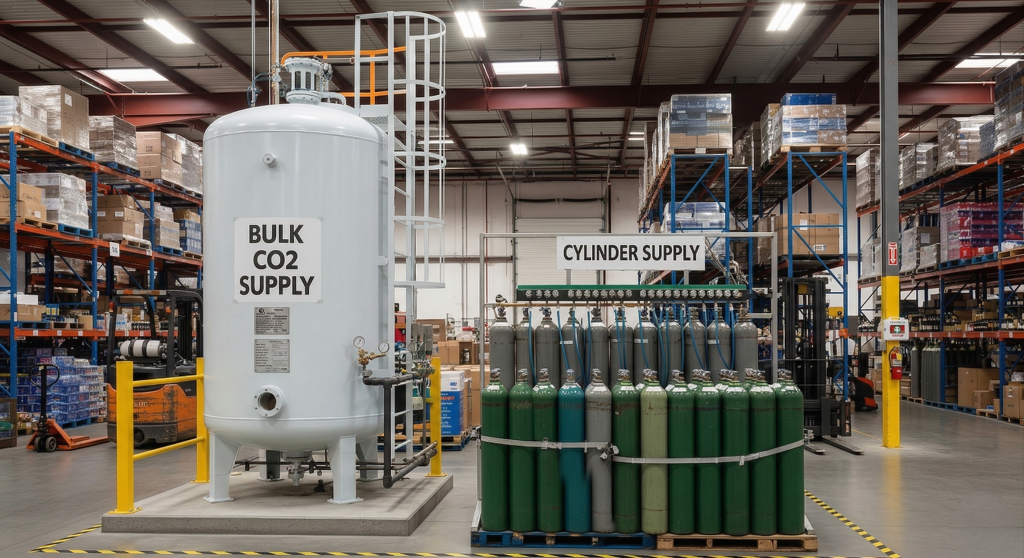
Bulk CO₂ Tank vs. Cylinder Supply: Cost Comparison for Beverage Distributors Introduction: CO₂ is vital in the beverage industry. Whether it is carbonated soft drinks or draught beer systems, a constant supply of CO₂ ensures the correct pressure, proper carbonation, and a reliable customer experience. For beverage distributors and restaurant operators, the choice of the optimal approach to CO₂ supply may have a profound effect on the efficiency of their operations and long-term expenses. Bulk CO₂ tanks and high-pressure cylinders are two of the most popular forms of supply. Bulk storage might seem to be the more professional or large-scale solution at first. Yet, the best option requires strong reliance on consumption volume, operational flexibility, and long-term cost assessment. Knowledge of how each system works can help beverage distributors make better decisions. Understanding Bulk CO₂ Tank Systems Bulk CO₂ storage tanks store liquid carbon dioxide at controlled pressure and temperature and are typically installed on site to serve beverage systems. They are usually used in large restaurants, breweries, and other establishments that require a lot of CO₂. These systems use liquid CO₂ that is slowly transformed into gas and channelled into the carbonation and draught systems. The tanks maintain internal pressure by venting. As temperature and pressure increase, the system releases minute amounts of CO₂ to keep levels safe. This loss is trivial in the case of large-volume operations, but can be huge for less-consuming businesses. CO₂ Consumption in Beverage Operations The analysis of bulk CO₂ storage presupposes the knowledge of real beverage consumption. CO₂ is mainly used to carbonate syrup and water in soft drinks. Industry estimates indicate that approximately 1 pound of CO₂ carbonates approximately 100 16-ounce beverages, though consumption depends on the pressure of the carbonation equipment and settings. For example, a restaurant with about 20 gallons of syrup a week can burn approximately 12 pounds of CO₂ to carbonate soda. All of this is even with draught beer added; some small- to mid-sized establishments can run on regular CO₂ cylinders. That is why equipment sizing is important: a bulk tank installed to allow moderate utilisation may lead to higher infrastructure costs and wasted CO₂. The Role of Syrup Box Volume The beverage operators must estimate the number of syrup boxes to be used per week; only after this can they select the CO₂ supply system. The syrup containers in bag-in-box form directly influence CO₂ consumption, and one 50-pound cylinder usually supports 10-12 syrup boxes in soda dispensing machines. For new restaurants or growing distributors, predicting beverage demand can be challenging due to shifting customer traffic and seasonal patterns. Due to this uncertainty, it might not be the most flexible to enter into bulk storage early. Starting with cylinder supply enables businesses to track actual usage and expand their CO₂ infrastructure to actual demand. Cost Structure of Bulk CO₂ Supply Bulk CO₂ systems involve several cost components beyond the gas itself. These may include: Tank installation and equipment setup Tank rental or lease agreements Scheduled refilling services Maintenance and inspection requirements The supplier usually designs bulk systems to support long-term service contracts. In large beverage establishments, such an arrangement can provide stable deliveries and easier supply control. The fixed infrastructure costs may, however, make it challenging to justify operations at lower or fluctuating consumption levels. Besides that, the bulk tank CO₂ venting is an unaccounted-for operational cost. Although the emitted gas is a typical system phenomenon, it is nonetheless a product that was purchased but not used in beverages. Advantages of Cylinder CO₂ Supply Beverage distributors and smaller food-service operations use high-pressure CO₂ cylinders. They are pressurised to hold the CO₂ and feed gas using regulators attached to beverage dispensing units. Product retention is one of the strengths. In contrast to bulk tanks, cyclone tanks do not release gas, so unutilised CO₂ is stored until utilised. There is also flexibility in cylinder supply, allowing businesses to exchange empty cylinders without long-term agreements. Moreover, cylinder systems can be scaled up so that many restaurants have a primary cylinder of 50 pounds and a smaller backup tank, enabling continuous service during peak times. When Bulk CO₂ Tanks Make Sense With all the merits of cylinder supply, bulk CO₂ tanks play an essential role in the beverage industry. Equipment with an incredibly high beer turnover rate tends to benefit from bulk storage, as it reduces the frequency of cylinder replacement. Soda fountains and draught beverage lines can be used concurrently in large venues such as stadiums, concert halls, and high-volume quick-service restaurants. The potential downsides might be offset in such settings because bulk delivery and automated refilling are convenient. For beverage distributors with such customers, bulk storage can simplify logistics and reduce the number of deliveries. Choosing the Right Supply Strategy The choice between bulk CO₂ tanks and cylinders ultimately depends on balancing the equipment’s capacity with the actual consumption trend. Excessive infrastructure can result in unjustified costs, and undersized systems can lead to operational failures. For new restaurants or hospitality businesses, supplying cylinders is a convenient, low-risk option. With increased beverage volume and a better understanding of usage patterns, switching to bulk storage may be considered based on actual operational data rather than estimates. A Practical Approach to CO₂ Supply The choice between cylinder and bulk CO₂ systems need not be final. Beverage activities change with rising customer demand, menu expansion, and service model changes. Starting with a flexible cylinder system can enable businesses to build a credible beverage service based on tracking actual CO₂ used. Bulk storage can be introduced as a strategic upgrade once the exchange frequency is high enough to warrant larger infrastructure. For both beverage distributors and restaurant operators, the goal is simple: deploy a CO₂ supply solution that enables effective operations without exceeding the budget. Selecting an appropriate system initially ensures a smooth, scalable beverage service aligned with future growth strategies. Rudy De La Fuente Linkedin Author Rudy De La Fuente, founder of Southwest Gases, has over 16 years of experience in the