
Blanketing vs Purging: Which Nitrogen Application Is Right for Chemical Storage Tanks?
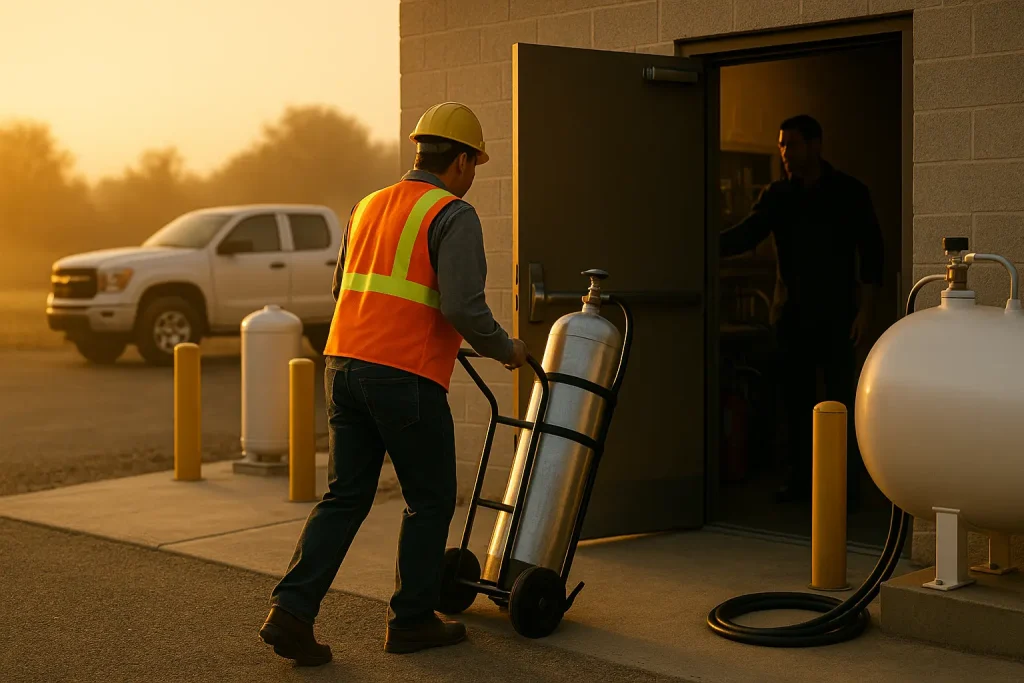
Blanketing vs Purging: Which Nitrogen Application Is Right for Chemical Storage Tanks? Introduction: Chemical storage tanks often need protection from oxygen, moisture, contamination, and changes in internal pressure. For many chemical facilities, nitrogen blanketing and purging are important methods for creating and maintaining a controlled tank atmosphere. Both applications use nitrogen, but for different applications. In normal tank operation, nitrogen blanketing provides a protective atmosphere, whereas nitrogen purging is typically used to remove unwanted gases, oxygen, or other contaminants from a tank or process system. Understanding the difference helps plant managers, engineers, and safety teams select the right chemical storage tank nitrogen strategy for their facility. What Is Nitrogen Blanketing? Nitrogen blanketing is the continuous or intermittent introduction of nitrogen into the vapor space above a liquid stored inside a tank. The goal is to keep a low-oxygen space between the surface of the liquid and the roof of the tank, but to control it. The nitrogen blanket may help minimize contact between the stored chemical and atmospheric oxygen. Liquid is withdrawn from a tank, increasing the vapor space. A blanketing system may be used to introduce nitrogen to maintain the desired pressure. The introduction of liquid reduces the vapor space, and the system must properly manage the pressure through the tank’s pressure-control and venting arrangements. In simple terms: Nitrogen blanketing = maintaining a protective atmosphere during storage and normal operations. This approach is commonly associated with chemicals and products that can be sensitive to oxygen, moisture, contamination, or changes in atmospheric conditions. What Is Nitrogen Purging? Nitrogen purging is the process of introducing nitrogen into a vessel, tank, pipe, or process system to displace an unwanted atmosphere. The unwanted atmosphere could contain oxygen, moisture, hydrocarbons, residual process gases, or another contaminant that needs to be removed before the next operation. Unlike blanketing, purging is generally a process activity rather than a continuous storage condition. For example, before maintenance, a facility may need to reduce the concentration of hazardous or flammable gases inside a tank. Nitrogen can be introduced to displace the existing atmosphere, subject to the facility’s engineering procedures and applicable safety requirements. In simple terms: Nitrogen purging = replacing or removing an unwanted atmosphere from a system. Nitrogen Blanketing vs Purging: Key Differences Factor Nitrogen Blanketing Nitrogen Purging Primary purpose Maintain a protective atmosphere Remove or displace an unwanted atmosphere Typical use Normal storage Startup, shutdown, changeover, maintenance, or process operations Duration Continuous or intermittent Usually temporary Main focus Oxygen and atmospheric control Atmosphere displacement Typical equipment Blanketing regulator, pressure controls, nitrogen supply Purge inlet, outlet/vent path, controls and monitoring Storage application Very common Used when tank conditions require atmosphere replacement Nitrogen demand Often lower and continuous Can be higher during the purge Process stage Ongoing storage Specific operational event The specific design is dependent on tank geometry, chemical properties, operating pressure, temperature, required oxygen concentration, process requirements, and applicable codes and standards. Why Chemical Tanks May Need Nitrogen Many chemical storage operations involve materials that can react with oxygen or moisture or require a controlled atmosphere to maintain product quality. A nitrogen atmosphere can help reduce oxygen exposure and limit the interaction between stored materials and ambient air. For example, some chemicals may oxidize when exposed to atmospheric oxygen. Others may absorb moisture from the air. In these cases, storage tank oxygen control can become an important part of the storage strategy. Nitrogen can also reduce the risk associated with unwanted atmospheric conditions in certain processes. However, nitrogen is not automatically the correct solution for every chemical tank. Engineers should evaluate the chemical, tank design, operating conditions, and hazard analysis before selecting an inert-gas system. When Is Nitrogen Blanketing the Better Choice? Blanketing is generally appropriate when the tank needs protection during normal storage and product movement. Consider a tank that stores an oxygen-sensitive chemical. As product leaves the tank, air could otherwise enter and fill the expanding vapor space. A nitrogen blanketing system can supply nitrogen instead. A properly designed system can automatically respond to changes in tank pressure. When Is Nitrogen Purging the Better Choice? Purging becomes more relevant when the atmosphere inside a tank or process system needs to be changed. For example, a tank may contain residual process vapors after a batch has been completed. Before maintenance or another operation, the facility may need to replace that atmosphere with nitrogen. Purging may be used during: Tank commissioning Startup procedures Shutdown procedures Tank inerting nitrogen Oxygen displacement Equipment preparation The purge method should be selected based on the specific hazard and engineering requirements. Facilities may use different purge strategies depending on tank configuration and the gas being displaced. Chemical Storage Tank Nitrogen for Oxygen Control Oxygen control is one of the main reasons facilities consider inert gas systems. Atmospheric oxygen can create problems when it comes into contact with certain chemicals or process vapors. Depending on the material, oxygen exposure may contribute to oxidation, degradation, contamination, or an undesirable reaction. A nitrogen purge system can remove oxygen during a defined operation, while a nitrogen blanket can help prevent atmospheric oxygen from returning during storage. This distinction is important. A facility might use purging to establish the desired atmosphere and then use blanketing to maintain that atmosphere afterward. When Are Blanketing and Purging Used Together? In many chemical operations, the answer is not necessarily blanketing or purging. The two applications can work together. Consider a chemical tank that is being prepared for a new production cycle. Step 1: Purging The tank may first undergo a controlled nitrogen purge to replace the existing atmosphere and reduce unwanted oxygen or residual gases. Step 2: Verification The facility may monitor relevant oxygen concentration, pressure, or other process parameters in accordance with operating procedures. Step 3: Filling The chemical product can then be introduced according to the facility’s established process. Step 4: Blanketing Once the tank enters normal storage, nitrogen blanketing can maintain the desired atmosphere as
Understanding Gas Purity Grades for Manufacturing, Food, and Laboratory Applications
The Real ROI of Switching Bulk CO2 Suppliers Introduction: Most companies routinely review insurance policies, utility contracts, and equipment vendors. But one supplier relationship is usually left untouched for years: the bulk CO₂ supplier. Whether you own a brewery, food processing plant, beverage manufacturer, greenhouse, or restaurant chain, you need carbon dioxide for your day-to-day operations. But picking a supplier only on price can prove to be an expensive mistake. Delivery delays, sneaky contract fees, unreliable service, and unexpected downtime can cost a lot more than a few extra dollars a tonne. The real return on investment (ROI) of switching CO₂ suppliers often comes from operational improvements that extend well beyond the invoice. Why CO₂ Supply Has Become a Strategic Business Decision Carbon dioxide rarely receives much attention until its supply becomes a problem. That changed dramatically in recent years when maintenance shutdowns at ammonia and ethanol plants, weather disruptions, and transportation challenges affected CO₂ availability across North America. Since much commercial CO₂ is captured as a by-product of industrial processes, supply depends on several interconnected industries rather than standalone production. The Compressed Gas Association (CGA) provides industry guidance on the safe production, transportation, and handling of compressed gases, highlighting the importance of reliable supply practices throughout the distribution chain. Compressed Gas Association (CGA) For businesses that rely on continuous CO₂ usage, supplier reliability has become just as important as pricing. Looking Beyond the Price Per Delivery Many procurement teams naturally compare suppliers based on quoted prices. However, an effective CO₂ supplier comparison should evaluate the total cost of ownership rather than only the purchase price. A supplier offering slightly lower pricing may actually increase costs through: Late deliveries Emergency refill charges Equipment downtime Lost production hours Poor customer support Hidden contract fees These indirect costs can quickly outweigh small pricing differences. Where the Real ROI Comes From: Better Supply Chain Reliability You can avoid business interruptions with reliable deliveries. Whether you’re running a beverage bottling line or a restaurant serving hundreds of customers a day, consistent availability of CO₂ helps avoid production delays and protects revenue. A reliable supply chain also gives businesses greater confidence in planning operations around seasonal demand peaks. Improved Delivery Efficiency A reliable bulk CO₂ delivery schedule minimizes emergency orders and avoidable logistics costs. Route optimization, tank monitoring technology, and usage forecasting are commonly employed by today’s suppliers to improve delivery efficiency. Instead of reacting to shortages, businesses are replenished before the inventory dips to critical levels. That means less disruption and more predictable operations. More Transparent Contract Pricing Price transparency matters. Many businesses discover hidden costs only after signing long-term agreements. These are the following points to review for evaluating suppliers, which are as follows: Delivery charges Fuel surcharges Tank rental fees Emergency delivery costs Minimum volume commitments Contract pricing and renewal terms Transparent pricing of contracts can help businesses to estimate costs and prevent high charges. Operational Cost Savings Outweigh CO₂ Cost The biggest benefit in switching suppliers is often not in the purchasing department. Consider a beverage manufacturer that has to shut down production for just one day due to a late CO₂ delivery. The costs include the following: Idle production staff Delayed customer shipments Missed production targets Equipment restart expenses Customer dissatisfaction Preventing any interruption can help in operational savings over the course of a year. The Hidden Costs of Staying With the Wrong Supplier Many companies are not inclined to switch vendors, as changing suppliers can seem to be a time-consuming process. They often stay with the same provider even when service quality has declined because of existing contracts, equipment compatibility, and scheduling issues. But the price of inaction can be much higher. A supplier who is habitually late with deliveries can throw well-laid production plans out of the window. Plants might have to turn off equipment, change workers’ schedules, or postpone orders for customers. Restaurants and breweries can lose beverage sales during their peak hours, and food processors can suffer costly interruptions in packaging operations. These operational setbacks rarely show up as line items on a CO₂ invoice, but they do affect profitability. Poor communication is yet another hidden cost. In waiting for updates in an emergency or when customers can’t reach account managers, precious production time gets lost in waiting. In industries where continuous operations are important, every hour of downtime can cut productivity and increase operating costs. The contract’s flexibility should also be assessed. Business needs don’t often stay the same over the course of years. They may produce more, open new locations, or create new product lines, all of which increase CO₂ emissions. Such growth may be constrained by rigid contract terms or a supplier’s inability to deliver, forcing companies to renegotiate contracts or find alternative suppliers. This is why procurement teams are increasingly evaluating suppliers on their overall service performance, not just price. Things like on-time delivery, emergency response, customer support, and inventory planning are much better indicators of long-term value. Technology Is Changing Supplier Performance Today’s leading suppliers provide much more than deliveries. Many now offer: Monitoring remote tanks Scheduling auto-refilling Reporting inventories digitally Analyzing usage trends Preventive maintenance support These technologies improve supplier performance while helping customers better understand consumption patterns. The result is fewer emergency deliveries, improved inventory planning, and greater operational efficiency. Questions to Ask Before Switching CO₂ Suppliers Changing suppliers should involve more than requesting a quote. Ask prospective suppliers: What is your on-time delivery rate? How do you handle emergency deliveries? Do you have remote tank monitoring? What support equipment is provided? Hidden contract charges? Do delivery schedules scale as business increases? What industries are you working with now? Does Switching Make Financial Sense Businesses must consider the following when opting for a CO₂ supplier: Frequent delay in deliveries Poor communication Rising service fees Emergency support Capacity constraints Inconsistent availability Lack of proactive account management These challenges involve the volume of an existing vendor, which can hinder operational efficiency and not contribute to business growth.
Why Snack and Coffee Manufacturers Use Nitrogen Instead of Air in Packaging
Blanketing vs Purging: Which Nitrogen Application Is Right for Chemical Storage Tanks? Introduction: Chemical storage tanks often need protection from oxygen, moisture, contamination, and changes in internal pressure. For many chemical facilities, nitrogen blanketing and purging are important methods for creating and maintaining a controlled tank atmosphere. Both applications use nitrogen, but for different applications. In normal tank operation, nitrogen blanketing provides a protective atmosphere, whereas nitrogen purging is typically used to remove unwanted gases, oxygen, or other contaminants from a tank or process system. Understanding the difference helps plant managers, engineers, and safety teams select the right chemical storage tank nitrogen strategy for their facility. What Is Nitrogen Blanketing? Nitrogen blanketing is the continuous or intermittent introduction of nitrogen into the vapor space above a liquid stored inside a tank. The goal is to keep a low-oxygen space between the surface of the liquid and the roof of the tank, but to control it. The nitrogen blanket may help minimize contact between the stored chemical and atmospheric oxygen. Liquid is withdrawn from a tank, increasing the vapor space. A blanketing system may be used to introduce nitrogen to maintain the desired pressure. The introduction of liquid reduces the vapor space, and the system must properly manage the pressure through the tank’s pressure-control and venting arrangements. In simple terms: Nitrogen blanketing = maintaining a protective atmosphere during storage and normal operations. This approach is commonly associated with chemicals and products that can be sensitive to oxygen, moisture, contamination, or changes in atmospheric conditions. What Is Nitrogen Purging? Nitrogen purging is the process of introducing nitrogen into a vessel, tank, pipe, or process system to displace an unwanted atmosphere. The unwanted atmosphere could contain oxygen, moisture, hydrocarbons, residual process gases, or another contaminant that needs to be removed before the next operation. Unlike blanketing, purging is generally a process activity rather than a continuous storage condition. For example, before maintenance, a facility may need to reduce the concentration of hazardous or flammable gases inside a tank. Nitrogen can be introduced to displace the existing atmosphere, subject to the facility’s engineering procedures and applicable safety requirements. In simple terms: Nitrogen purging = replacing or removing an unwanted atmosphere from a system. Nitrogen Blanketing vs Purging: Key Differences Factor Nitrogen Blanketing Nitrogen Purging Primary purpose Maintain a protective atmosphere Remove or displace an unwanted atmosphere Typical use Normal storage Startup, shutdown, changeover, maintenance, or process operations Duration Continuous or intermittent Usually temporary Main focus Oxygen and atmospheric control Atmosphere displacement Typical equipment Blanketing regulator, pressure controls, nitrogen supply Purge inlet, outlet/vent path, controls and monitoring Storage application Very common Used when tank conditions require atmosphere replacement Nitrogen demand Often lower and continuous Can be higher during the purge Process stage Ongoing storage Specific operational event The specific design is dependent on tank geometry, chemical properties, operating pressure, temperature, required oxygen concentration, process requirements, and applicable codes and standards. Why Chemical Tanks May Need Nitrogen Many chemical storage operations involve materials that can react with oxygen or moisture or require a controlled atmosphere to maintain product quality. A nitrogen atmosphere can help reduce oxygen exposure and limit the interaction between stored materials and ambient air. For example, some chemicals may oxidize when exposed to atmospheric oxygen. Others may absorb moisture from the air. In these cases, storage tank oxygen control can become an important part of the storage strategy. Nitrogen can also reduce the risk associated with unwanted atmospheric conditions in certain processes. However, nitrogen is not automatically the correct solution for every chemical tank. Engineers should evaluate the chemical, tank design, operating conditions, and hazard analysis before selecting an inert-gas system. When Is Nitrogen Blanketing the Better Choice? Blanketing is generally appropriate when the tank needs protection during normal storage and product movement. Consider a tank that stores an oxygen-sensitive chemical. As product leaves the tank, air could otherwise enter and fill the expanding vapor space. A nitrogen blanketing system can supply nitrogen instead. A properly designed system can automatically respond to changes in tank pressure. When Is Nitrogen Purging the Better Choice? Purging becomes more relevant when the atmosphere inside a tank or process system needs to be changed. For example, a tank may contain residual process vapors after a batch has been completed. Before maintenance or another operation, the facility may need to replace that atmosphere with nitrogen. Purging may be used during: Tank commissioning Startup procedures Shutdown procedures Tank inerting nitrogen Oxygen displacement Equipment preparation The purge method should be selected based on the specific hazard and engineering requirements. Facilities may use different purge strategies depending on tank configuration and the gas being displaced. Chemical Storage Tank Nitrogen for Oxygen Control Oxygen control is one of the main reasons facilities consider inert gas systems. Atmospheric oxygen can create problems when it comes into contact with certain chemicals or process vapors. Depending on the material, oxygen exposure may contribute to oxidation, degradation, contamination, or an undesirable reaction. A nitrogen purge system can remove oxygen during a defined operation, while a nitrogen blanket can help prevent atmospheric oxygen from returning during storage. This distinction is important. A facility might use purging to establish the desired atmosphere and then use blanketing to maintain that atmosphere afterward. When Are Blanketing and Purging Used Together? In many chemical operations, the answer is not necessarily blanketing or purging. The two applications can work together. Consider a chemical tank that is being prepared for a new production cycle. Step 1: Purging The tank may first undergo a controlled nitrogen purge to replace the existing atmosphere and reduce unwanted oxygen or residual gases. Step 2: Verification The facility may monitor relevant oxygen concentration, pressure, or other process parameters in accordance with operating procedures. Step 3: Filling The chemical product can then be introduced according to the facility’s established process. Step 4: Blanketing Once the tank enters normal storage, nitrogen blanketing can maintain the desired atmosphere as
Fixed Delivery Routes vs On-Demand Propane Delivery: Which Model Works Better?
The Real ROI of Switching Bulk CO2 Suppliers Introduction: Most companies routinely review insurance policies, utility contracts, and equipment vendors. But one supplier relationship is usually left untouched for years: the bulk CO₂ supplier. Whether you own a brewery, food processing plant, beverage manufacturer, greenhouse, or restaurant chain, you need carbon dioxide for your day-to-day operations. But picking a supplier only on price can prove to be an expensive mistake. Delivery delays, sneaky contract fees, unreliable service, and unexpected downtime can cost a lot more than a few extra dollars a tonne. The real return on investment (ROI) of switching CO₂ suppliers often comes from operational improvements that extend well beyond the invoice. Why CO₂ Supply Has Become a Strategic Business Decision Carbon dioxide rarely receives much attention until its supply becomes a problem. That changed dramatically in recent years when maintenance shutdowns at ammonia and ethanol plants, weather disruptions, and transportation challenges affected CO₂ availability across North America. Since much commercial CO₂ is captured as a by-product of industrial processes, supply depends on several interconnected industries rather than standalone production. The Compressed Gas Association (CGA) provides industry guidance on the safe production, transportation, and handling of compressed gases, highlighting the importance of reliable supply practices throughout the distribution chain. Compressed Gas Association (CGA) For businesses that rely on continuous CO₂ usage, supplier reliability has become just as important as pricing. Looking Beyond the Price Per Delivery Many procurement teams naturally compare suppliers based on quoted prices. However, an effective CO₂ supplier comparison should evaluate the total cost of ownership rather than only the purchase price. A supplier offering slightly lower pricing may actually increase costs through: Late deliveries Emergency refill charges Equipment downtime Lost production hours Poor customer support Hidden contract fees These indirect costs can quickly outweigh small pricing differences. Where the Real ROI Comes From: Better Supply Chain Reliability You can avoid business interruptions with reliable deliveries. Whether you’re running a beverage bottling line or a restaurant serving hundreds of customers a day, consistent availability of CO₂ helps avoid production delays and protects revenue. A reliable supply chain also gives businesses greater confidence in planning operations around seasonal demand peaks. Improved Delivery Efficiency A reliable bulk CO₂ delivery schedule minimizes emergency orders and avoidable logistics costs. Route optimization, tank monitoring technology, and usage forecasting are commonly employed by today’s suppliers to improve delivery efficiency. Instead of reacting to shortages, businesses are replenished before the inventory dips to critical levels. That means less disruption and more predictable operations. More Transparent Contract Pricing Price transparency matters. Many businesses discover hidden costs only after signing long-term agreements. These are the following points to review for evaluating suppliers, which are as follows: Delivery charges Fuel surcharges Tank rental fees Emergency delivery costs Minimum volume commitments Contract pricing and renewal terms Transparent pricing of contracts can help businesses to estimate costs and prevent high charges. Operational Cost Savings Outweigh CO₂ Cost The biggest benefit in switching suppliers is often not in the purchasing department. Consider a beverage manufacturer that has to shut down production for just one day due to a late CO₂ delivery. The costs include the following: Idle production staff Delayed customer shipments Missed production targets Equipment restart expenses Customer dissatisfaction Preventing any interruption can help in operational savings over the course of a year. The Hidden Costs of Staying With the Wrong Supplier Many companies are not inclined to switch vendors, as changing suppliers can seem to be a time-consuming process. They often stay with the same provider even when service quality has declined because of existing contracts, equipment compatibility, and scheduling issues. But the price of inaction can be much higher. A supplier who is habitually late with deliveries can throw well-laid production plans out of the window. Plants might have to turn off equipment, change workers’ schedules, or postpone orders for customers. Restaurants and breweries can lose beverage sales during their peak hours, and food processors can suffer costly interruptions in packaging operations. These operational setbacks rarely show up as line items on a CO₂ invoice, but they do affect profitability. Poor communication is yet another hidden cost. In waiting for updates in an emergency or when customers can’t reach account managers, precious production time gets lost in waiting. In industries where continuous operations are important, every hour of downtime can cut productivity and increase operating costs. The contract’s flexibility should also be assessed. Business needs don’t often stay the same over the course of years. They may produce more, open new locations, or create new product lines, all of which increase CO₂ emissions. Such growth may be constrained by rigid contract terms or a supplier’s inability to deliver, forcing companies to renegotiate contracts or find alternative suppliers. This is why procurement teams are increasingly evaluating suppliers on their overall service performance, not just price. Things like on-time delivery, emergency response, customer support, and inventory planning are much better indicators of long-term value. Technology Is Changing Supplier Performance Today’s leading suppliers provide much more than deliveries. Many now offer: Monitoring remote tanks Scheduling auto-refilling Reporting inventories digitally Analyzing usage trends Preventive maintenance support These technologies improve supplier performance while helping customers better understand consumption patterns. The result is fewer emergency deliveries, improved inventory planning, and greater operational efficiency. Questions to Ask Before Switching CO₂ Suppliers Changing suppliers should involve more than requesting a quote. Ask prospective suppliers: What is your on-time delivery rate? How do you handle emergency deliveries? Do you have remote tank monitoring? What support equipment is provided? Hidden contract charges? Do delivery schedules scale as business increases? What industries are you working with now? Does Switching Make Financial Sense Businesses must consider the following when opting for a CO₂ supplier: Frequent delay in deliveries Poor communication Rising service fees Emergency support Capacity constraints Inconsistent availability Lack of proactive account management These challenges involve the volume of an existing vendor, which can hinder operational efficiency and not contribute to business growth.
The Real ROI of Switching Bulk CO2 Suppliers
The Real ROI of Switching Bulk CO2 Suppliers Introduction: Most companies routinely review insurance policies, utility contracts, and equipment vendors. But one supplier relationship is usually left untouched for years: the bulk CO₂ supplier. Whether you own a brewery, food processing plant, beverage manufacturer, greenhouse, or restaurant chain, you need carbon dioxide for your day-to-day operations. But picking a supplier only on price can prove to be an expensive mistake. Delivery delays, sneaky contract fees, unreliable service, and unexpected downtime can cost a lot more than a few extra dollars a tonne. The real return on investment (ROI) of switching CO₂ suppliers often comes from operational improvements that extend well beyond the invoice. Why CO₂ Supply Has Become a Strategic Business Decision Carbon dioxide rarely receives much attention until its supply becomes a problem. That changed dramatically in recent years when maintenance shutdowns at ammonia and ethanol plants, weather disruptions, and transportation challenges affected CO₂ availability across North America. Since much commercial CO₂ is captured as a by-product of industrial processes, supply depends on several interconnected industries rather than standalone production. The Compressed Gas Association (CGA) provides industry guidance on the safe production, transportation, and handling of compressed gases, highlighting the importance of reliable supply practices throughout the distribution chain. Compressed Gas Association (CGA) For businesses that rely on continuous CO₂ usage, supplier reliability has become just as important as pricing. Looking Beyond the Price Per Delivery Many procurement teams naturally compare suppliers based on quoted prices. However, an effective CO₂ supplier comparison should evaluate the total cost of ownership rather than only the purchase price. A supplier offering slightly lower pricing may actually increase costs through: Late deliveries Emergency refill charges Equipment downtime Lost production hours Poor customer support Hidden contract fees These indirect costs can quickly outweigh small pricing differences. Where the Real ROI Comes From: Better Supply Chain Reliability You can avoid business interruptions with reliable deliveries. Whether you’re running a beverage bottling line or a restaurant serving hundreds of customers a day, consistent availability of CO₂ helps avoid production delays and protects revenue. A reliable supply chain also gives businesses greater confidence in planning operations around seasonal demand peaks. Improved Delivery Efficiency A reliable bulk CO₂ delivery schedule minimizes emergency orders and avoidable logistics costs. Route optimization, tank monitoring technology, and usage forecasting are commonly employed by today’s suppliers to improve delivery efficiency. Instead of reacting to shortages, businesses are replenished before the inventory dips to critical levels. That means less disruption and more predictable operations. More Transparent Contract Pricing Price transparency matters. Many businesses discover hidden costs only after signing long-term agreements. These are the following points to review for evaluating suppliers, which are as follows: Delivery charges Fuel surcharges Tank rental fees Emergency delivery costs Minimum volume commitments Contract pricing and renewal terms Transparent pricing of contracts can help businesses to estimate costs and prevent high charges. Operational Cost Savings Outweigh CO₂ Cost The biggest benefit in switching suppliers is often not in the purchasing department. Consider a beverage manufacturer that has to shut down production for just one day due to a late CO₂ delivery. The costs include the following: Idle production staff Delayed customer shipments Missed production targets Equipment restart expenses Customer dissatisfaction Preventing any interruption can help in operational savings over the course of a year. The Hidden Costs of Staying With the Wrong Supplier Many companies are not inclined to switch vendors, as changing suppliers can seem to be a time-consuming process. They often stay with the same provider even when service quality has declined because of existing contracts, equipment compatibility, and scheduling issues. But the price of inaction can be much higher. A supplier who is habitually late with deliveries can throw well-laid production plans out of the window. Plants might have to turn off equipment, change workers’ schedules, or postpone orders for customers. Restaurants and breweries can lose beverage sales during their peak hours, and food processors can suffer costly interruptions in packaging operations. These operational setbacks rarely show up as line items on a CO₂ invoice, but they do affect profitability. Poor communication is yet another hidden cost. In waiting for updates in an emergency or when customers can’t reach account managers, precious production time gets lost in waiting. In industries where continuous operations are important, every hour of downtime can cut productivity and increase operating costs. The contract’s flexibility should also be assessed. Business needs don’t often stay the same over the course of years. They may produce more, open new locations, or create new product lines, all of which increase CO₂ emissions. Such growth may be constrained by rigid contract terms or a supplier’s inability to deliver, forcing companies to renegotiate contracts or find alternative suppliers. This is why procurement teams are increasingly evaluating suppliers on their overall service performance, not just price. Things like on-time delivery, emergency response, customer support, and inventory planning are much better indicators of long-term value. Technology Is Changing Supplier Performance Today’s leading suppliers provide much more than deliveries. Many now offer: Monitoring remote tanks Scheduling auto-refilling Reporting inventories digitally Analyzing usage trends Preventive maintenance support These technologies improve supplier performance while helping customers better understand consumption patterns. The result is fewer emergency deliveries, improved inventory planning, and greater operational efficiency. Questions to Ask Before Switching CO₂ Suppliers Changing suppliers should involve more than requesting a quote. Ask prospective suppliers: What is your on-time delivery rate? How do you handle emergency deliveries? Do you have remote tank monitoring? What support equipment is provided? Hidden contract charges? Do delivery schedules scale as business increases? What industries are you working with now? Does Switching Make Financial Sense Businesses must consider the following when opting for a CO₂ supplier: Frequent delay in deliveries Poor communication Rising service fees Emergency support Capacity constraints Inconsistent availability Lack of proactive account management These challenges involve the volume of
What High-Volume Restaurants Look for in a CO₂ Partner
What High-Volume Restaurants Look for in a CO₂ Partner Introduction: When you walk into a busy restaurant on a Friday night, you’ll see servers rushing between tables, bartenders pouring draft beer, soft drink dispensers working nonstop, and kitchens operating at full speed. What most customers never notice is that many of these operations depend on one essential product: carbon dioxide (CO₂). CO₂ is used to power soda fountains. They help in keeping draft beer flowing. In addition, some commercial kitchens use it to help preserve food. For high-volume restaurants, even a momentary disruption to CO₂ supply can result in lost beverage sales, unhappy customers, and downtime. That’s why choosing the right CO₂ partner is not only about ordering petrol cylinders but also about business continuity. As restaurants continue to serve more customers and beverage sales remain a significant revenue source, finding a reliable restaurant CO₂ supplier has become a critical business decision. How the Right CO₂ Partner Improves Your Day-to-Day Operations In a high-volume restaurant, every minute of service is important. Beverage stations often pump out hundreds of drinks in a few hours during lunch and dinner rushes. If the CO₂ system goes down, staff waste valuable time troubleshooting the equipment instead of serving customers. Proactive service and inventory planning can help a good restaurant CO₂ supplier avoid these failures. Also, seasoned suppliers are more inclined to propose deliveries based on their historical consumption and seasonal demand, rather than waiting for restaurants to report empty cylinders or low bulk tank levels. Reliable suppliers also know that every restaurant works differently. A fast-food chain serving thousands of fountain drinks daily will have different CO₂ needs than a fine-dining restaurant with an extensive draft beer CO₂ list. Suppliers can review beverage sales, equipment capacity, and operating hours to recommend the most efficient CO₂ solution for each location. Also, suppliers often conduct periodic visual inspections of cylinders. It also includes inspecting other aspects such as regulators, valves, and delivery equipment during scheduled visits. Restaurants can avoid any kind of expensive downtime and emergency repairs by taking small problems into consideration. Why CO₂ Matters More Than Most Restaurant Owners Realize Carbon dioxide has been part of the food and beverage industry for well over a century. The first commercial soda fountains appeared in the late 1800s, while draft beer systems became increasingly common throughout the twentieth century. Today, virtually every modern restaurant serving fountain drinks or draft beverages depends on a steady CO₂ supply. The U.S. Food & Drug Administration regulates food-grade CO₂. This is used in food and beverage applications to ensure that it aligns with the safety and purity requirements. U.S. Food & Drug Administration – Food Ingredients & Packaging Restaurants require a proper and continuous supply of CO₂. Without which, they may experience: Flat soft drinks Poor-quality draft beer Interrupted beverage service Reduced customer satisfaction Lost daily revenue For busy restaurants, every hour without CO2 directly affects sales. What High-Volume Restaurants Expect from a CO₂ Partner Reliable CO₂ Delivery Consistency is the first priority. A dependable CO₂ delivery service ensures restaurants never run out during peak business hours. Reliable suppliers maintain scheduled deliveries while also monitoring customer usage patterns to recommend refill schedules before cylinders become empty. Many restaurants also prefer suppliers that can scale deliveries during holidays, sporting events, and seasonal demand spikes. Certified Food Grade CO₂ Restaurants cannot compromise on quality. Only certified food-grade CO₂ should be used in beverage systems. High-purity CO₂ helps preserve beverage taste, carbonation, and food safety standards. This becomes especially important for restaurants serving hundreds or thousands of beverages every day. Emergency CO₂ Support Even well-managed operations occasionally face unexpected situations. Equipment failures, unusually busy weekends, or delayed deliveries can quickly create shortages. Restaurants, therefore, value suppliers that offer emergency CO₂ delivery outside normal business hours. A rapid response minimizes downtime and prevents unnecessary revenue loss. Beverage Systems Depend on Consistent CO₂ Draft Beer Systems Restaurants with extensive beer selections rely on draft beer CO₂ to maintain proper serving pressure. Too much pressure makes flat beer. Too much pressure means too much foam, uneven pours, and wasted product. Proper management of CO₂ helps control beverage quality and reduce waste behind the bar. Soda Fountain Supplies Soda fountain CO₂ supplies are necessary to ensure restaurants are able to maintain a continuous availability of modern fountain dispensers to work. CO₂ provides carbonation and helps push syrup and water through dispensing systems. Any disruption has an immediate impact on the drink service. Since fountain drinks typically generate high profit margins, maintaining an uninterrupted CO₂ supply is essential for restaurant profitability. Bulk CO₂ or Cylinder Exchange? Growing restaurants eventually reach a decision between traditional cylinders and bulk CO₂ for restaurants. Smaller restaurants tend to benefit from the usage of cylinder exchange programs. Some of the top advantages include the following: Lower investment required upfront Simple replacement process Minimal storage requirements Flexible availability of inventory Bulk CO₂ storage systems are typical for larger restaurants, stadiums, hotels, and entertainment venues where continuous high-volume beverage operations must be supported. The best CO₂ partner guides you to identify which solution works for the current demand but also plans for future growth. What are the Benefits of Cylinder Exchange Programs A reliable cylinder exchange program takes care of so many operational issues. Instead of waiting for cylinders to be refilled, it is recommended for restaurants to receive tested cylinders during scheduled deliveries, ready to use. There are several advantages of this approach: Reduced downtime Improved safety Faster service Better inventory management Compliance with inspection requirements In the case of busy restaurants, it is imperative to exchange cylinders. It can often be far more efficient than managing refills independently Supply Reliability Has Become More Important Recent CO₂ shortages have demonstrated how vulnerable supply chains can become. Carbon dioxide is produced largely as a byproduct of industries such as ethanol production, ammonia manufacturing, and hydrogen
What Are Specialty Gases and Which Industries in Dallas Use Them Most?
What Are Specialty Gases and Which Industries in Dallas Use Them Most? Introduction: Dallas has become one of the most important industrial hubs in Texas. From aerospace manufacturing and advanced healthcare facilities to semiconductor production and environmental testing labs, many of these industries rely on something most people never think about – specialty gases Dallas. Unlike large-volume commercial gases such as oxygen, nitrogen, or argon, specialty gases are manufactured to precise purity levels and compositions. Even tiny amounts of impurities can bring down the overall quality of a product, laboratory results, or manufacturing processes. Therefore, they are often measured in parts per million (ppm) or parts per billion (ppb). As Dallas continues to attract high-tech manufacturing, medical research, and data-driven industries, demand for specialty gases Dallas suppliers providers has steadily increased. What Are Specialty Gases? Specialty gases are high-purity gases or prepared mixtures of gases for specific applications. These gases are produced following quality standards. It is used in applications that require accuracy, uniformity, and cleanliness. These categories include: High-purity gases for semiconductor manufacturing Calibration gases Dallas laboratories use to test analytical instruments The research facilities require laboratory gases Dallas for experiments Monitor the environment using analytical gases Aerospace gases used in testing and manufacturing Semiconductor gases for chip fabrication Custom gas mixtures for industrial and scientific purposes The U.S. National Institute of Standards and Technology (NIST) follows a standard measurement. It helps in ensuring the gas mixtures are accurate and that the companies are able to trace any impurities. It ensures it can be used for scientific and industrial purposes. The Evolution of Specialty Gases The specialty gas market did not emerge overnight. In the 1950s and 1960s, specialty gases were primarily used by research laboratories and government agencies. As electronics manufacturing expanded during the computer revolution, demand for ultra-pure gases increased dramatically. By the 1990s, semiconductor fabrication plants required gases with purity levels exceeding 99.9999%. Today, advanced manufacturing processes often require even stricter specifications. Dallas benefited from this trend as Texas developed its strong aerospace, electronics, healthcare, and energy sectors, all of which depend on precision gas technologies. Where Specialty Gases Are Used in Dallas Aerospace and Defense North Texas has been a center for aerospace manufacturing and defense technology. They are required for the functioning of aircraft components in addition to satellites, navigation systems, and military equipment. These are also used in specialized testing environments that require precise gas mixtures. Aerospace gases are used for: Material testing Leak detection Calibration of sensors Environmental simulation chambers Even minor inaccuracies in gas composition can affect testing results and equipment performance. Semiconductor and Electronics Manufacturing The semiconductor industry consumes some of the world’s highest-purity gases. Dallas-area electronics manufacturers use semiconductor gases during: Wafer fabrication Etching processes Deposition processes Cleanroom operations Ultra-high-purity nitrogen, hydrogen, helium, and specialty gas blends help prevent contamination during chip production. With the U.S. semiconductor industry expanding following major investments in domestic manufacturing, demand for specialty gases continues to rise. The Semiconductor Industry Association provides ongoing industry data and trends. Healthcare and Medical Laboratories Dallas is home to numerous hospitals, research centers, and diagnostic laboratories. These facilities rely heavily on laboratory gases Dallas providers supply the following: Blood analysis Medical device testing Pharmaceutical research Clinical diagnostics Analytical instruments like gas chromatographs and mass spectrometers require highly accurate gas supplies to produce reliable results. Environmental Testing Environmental compliance has become increasingly important across Texas industries. Testing laboratories use calibration gases Dallas businesses depend on to verify air quality monitoring equipment and emissions analyzers. These gas mixtures help organizations measure the following: Carbon monoxide (CO) Sulfur dioxide (SO₂) Nitrogen oxides (NO₂) Volatile organic compounds (VOCs) Without calibration gases, it will be challenging to get reliable and accurate data using environmental monitoring equipment. Why High Purity Matters? The difference between industrial gases and high-purity gases can be difficult to appreciate until something goes wrong. Imagine a semiconductor facility producing millions of microchips. A tiny contaminant in a gas supply could affect thousands of chips before the issue is detected. Similarly, a laboratory conducting environmental testing could generate inaccurate results if calibration gases are not prepared correctly. That is why specialty gases often undergo extensive quality testing, certification, and traceability verification before reaching customers. Specialty Gas Purity Requirements Application Typical Purity Requirement Welding 99%+ Medical Applications 99.5%+ Laboratory Analysis 99.99%+ Semiconductor Manufacturing 99.9999%+ Advanced Research 99.99999%+ The Growing Demand for Specialty Gases in Dallas Several trends are driving demand for specialty gas suppliers Dallas. Businesses rely on the following: Growth of Technology In electronics manufacturing and advanced computing, the growing use of data centers is also a major driver of demand for specialty gases. Innovation in healthcare The development of medical research, diagnostics, and pharmaceuticals needs ever more sophisticated analytical gases and calibration standards. Environmental Rules The rising demand for calibration and analytical gases from the industrial sectors is due to the more stringent requirements for emissions monitoring. High-Tech Manufacturing Many modern production processes require ever higher accuracy. This results in a continuous demand for specialized gas mixtures. How Specialty Gases Support Innovation Across Dallas? Dallas has evolved into more than just a major business center. It has become a hub for advanced manufacturing, biotechnology, telecommunications, and scientific research. As these industries continue to grow, so does the need for highly specialized gas solutions. For example, biotechnology labs use specialty gases to aid in pharmaceutical development, genetic analysis, and quality control testing. Analytical instruments require accurate gas mixtures to deliver accurate measurements for laboratory analysis and drug development. Electronics manufacturers use ultra-high-purity gases in their manufacturing process. Even slight contamination can compromise product quality or result in costly production losses. The consistency of gas purity enables manufacturers to increase yields with a low defect rate. Specialty gases are also vital to scientific research in chemistry, environmental science, materials engineering, and medical innovation by research institutions throughout the Dallas-Fort Worth area. With a reliable supply of gas, researchers
When Is It Time to Replace Your Current Liquid Nitrogen Supplier?
The Real ROI of Switching Bulk CO2 Suppliers Introduction: Most companies routinely review insurance policies, utility contracts, and equipment vendors. But one supplier relationship is usually left untouched for years: the bulk CO₂ supplier. Whether you own a brewery, food processing plant, beverage manufacturer, greenhouse, or restaurant chain, you need carbon dioxide for your day-to-day operations. But picking a supplier only on price can prove to be an expensive mistake. Delivery delays, sneaky contract fees, unreliable service, and unexpected downtime can cost a lot more than a few extra dollars a tonne. The real return on investment (ROI) of switching CO₂ suppliers often comes from operational improvements that extend well beyond the invoice. Why CO₂ Supply Has Become a Strategic Business Decision Carbon dioxide rarely receives much attention until its supply becomes a problem. That changed dramatically in recent years when maintenance shutdowns at ammonia and ethanol plants, weather disruptions, and transportation challenges affected CO₂ availability across North America. Since much commercial CO₂ is captured as a by-product of industrial processes, supply depends on several interconnected industries rather than standalone production. The Compressed Gas Association (CGA) provides industry guidance on the safe production, transportation, and handling of compressed gases, highlighting the importance of reliable supply practices throughout the distribution chain. Compressed Gas Association (CGA) For businesses that rely on continuous CO₂ usage, supplier reliability has become just as important as pricing. Looking Beyond the Price Per Delivery Many procurement teams naturally compare suppliers based on quoted prices. However, an effective CO₂ supplier comparison should evaluate the total cost of ownership rather than only the purchase price. A supplier offering slightly lower pricing may actually increase costs through: Late deliveries Emergency refill charges Equipment downtime Lost production hours Poor customer support Hidden contract fees These indirect costs can quickly outweigh small pricing differences. Where the Real ROI Comes From: Better Supply Chain Reliability You can avoid business interruptions with reliable deliveries. Whether you’re running a beverage bottling line or a restaurant serving hundreds of customers a day, consistent availability of CO₂ helps avoid production delays and protects revenue. A reliable supply chain also gives businesses greater confidence in planning operations around seasonal demand peaks. Improved Delivery Efficiency A reliable bulk CO₂ delivery schedule minimizes emergency orders and avoidable logistics costs. Route optimization, tank monitoring technology, and usage forecasting are commonly employed by today’s suppliers to improve delivery efficiency. Instead of reacting to shortages, businesses are replenished before the inventory dips to critical levels. That means less disruption and more predictable operations. More Transparent Contract Pricing Price transparency matters. Many businesses discover hidden costs only after signing long-term agreements. These are the following points to review for evaluating suppliers, which are as follows: Delivery charges Fuel surcharges Tank rental fees Emergency delivery costs Minimum volume commitments Contract pricing and renewal terms Transparent pricing of contracts can help businesses to estimate costs and prevent high charges. Operational Cost Savings Outweigh CO₂ Cost The biggest benefit in switching suppliers is often not in the purchasing department. Consider a beverage manufacturer that has to shut down production for just one day due to a late CO₂ delivery. The costs include the following: Idle production staff Delayed customer shipments Missed production targets Equipment restart expenses Customer dissatisfaction Preventing any interruption can help in operational savings over the course of a year. The Hidden Costs of Staying With the Wrong Supplier Many companies are not inclined to switch vendors, as changing suppliers can seem to be a time-consuming process. They often stay with the same provider even when service quality has declined because of existing contracts, equipment compatibility, and scheduling issues. But the price of inaction can be much higher. A supplier who is habitually late with deliveries can throw well-laid production plans out of the window. Plants might have to turn off equipment, change workers’ schedules, or postpone orders for customers. Restaurants and breweries can lose beverage sales during their peak hours, and food processors can suffer costly interruptions in packaging operations. These operational setbacks rarely show up as line items on a CO₂ invoice, but they do affect profitability. Poor communication is yet another hidden cost. In waiting for updates in an emergency or when customers can’t reach account managers, precious production time gets lost in waiting. In industries where continuous operations are important, every hour of downtime can cut productivity and increase operating costs. The contract’s flexibility should also be assessed. Business needs don’t often stay the same over the course of years. They may produce more, open new locations, or create new product lines, all of which increase CO₂ emissions. Such growth may be constrained by rigid contract terms or a supplier’s inability to deliver, forcing companies to renegotiate contracts or find alternative suppliers. This is why procurement teams are increasingly evaluating suppliers on their overall service performance, not just price. Things like on-time delivery, emergency response, customer support, and inventory planning are much better indicators of long-term value. Technology Is Changing Supplier Performance Today’s leading suppliers provide much more than deliveries. Many now offer: Monitoring remote tanks Scheduling auto-refilling Reporting inventories digitally Analyzing usage trends Preventive maintenance support These technologies improve supplier performance while helping customers better understand consumption patterns. The result is fewer emergency deliveries, improved inventory planning, and greater operational efficiency. Questions to Ask Before Switching CO₂ Suppliers Changing suppliers should involve more than requesting a quote. Ask prospective suppliers: What is your on-time delivery rate? How do you handle emergency deliveries? Do you have remote tank monitoring? What support equipment is provided? Hidden contract charges? Do delivery schedules scale as business increases? What industries are you working with now? Does Switching Make Financial Sense Businesses must consider the following when opting for a CO₂ supplier: Frequent delay in deliveries Poor communication Rising service fees Emergency support Capacity constraints Inconsistent availability Lack of proactive account management These challenges involve the volume of an existing vendor, which can hinder operational efficiency and not contribute to business growth.
How Specialty Gas Suppliers Handle Purity Standards, Certification, and Traceability
How Specialty Gas Suppliers Handle Purity Standards, Certification, and Traceability Introduction: If your business processes depend on gas, you cannot be lenient in your purchasing decisions. Whether it is operating an analytical laboratory, a pharmaceutical plant, a semiconductor facility, or any specialized manufacturing operation, gas plays a major role in ensuring an unhindered flow of processes. The quality system behind the gas matters as much as any other aspect of production. Herein, reliable specialty gas suppliers matter more than just filling cylinders. They assist in a plethora of operations. These include managing processes such as verifying gas purity, controlling contamination, documenting, ensuring traceability, and ensuring consistent delivery. With these, suppliers ensure operations remain accurate, compliant, and uninterrupted. For procurement teams, industrial buyers, and lab managers, choosing the right supplier directly affects product quality. It also impacts the performance, process stability, and safety during work. Supply of contaminated gas or improperly documented gas can lead to inaccurate calibration. It can lead to improper audits, damage, batch rejections, and increased costs. Hence, understanding how gas suppliers manage certification, purity standards, and traceability can help buyers make more informed purchasing decisions. Why Specialty Gas Purity Matters? In most industries, even a minute trace of contaminants in the gas can impact the overall production process. In addition, it can also impact the accuracy of audits. Contaminants such as hydrocarbons, moisture, particulate matter, or oxygen can disrupt operations and cause major losses. That makes specialty gas purity an essential aspect for applications, such as industries like: Environmental monitoring Analytical testing labs Manufacturing of semiconductors Pharma productions Calibration and metrology Petrochemical analysis For example, all calibration instruments used in pharmaceutical labs or for emission tests require accurate gas composition. Even a slight variation can compromise the accuracy and compliance. Similarly, in semiconductor fabrication facilities, extremely controlled gas environments are required. Even parts-per-billion contamination can damage wafers or reduce production yield. Understanding Purity Grades Specialty gases vary in their purity standards. It is according to the requirements of different applications. It depends on contamination tolerance or operational sensitivity. Ultra-High Purity (UHP) Ultra-High Purity gas contains 99.999% purity standards. It is referred to as a 5.0 grade. These gases are mostly used in industries related to: Production of fiber optics Manufacture of semiconductor Calibration systems Industrial applications requiring high precision Trace levels of contaminants must be tightly controlled. Even small impurities can impact the sensitivity and analytical accuracy of instruments. Research Grade These are manufactured as per strict industry standards. These include SEMI specifications. The gases require a controlled mixture, often containing oxygen, particulates, and hydrocarbons. Semiconductor applications require the strictest purity controls, as contamination can affect chip performance and manufacturing yield. Gas Certification and Documentation Requirements Gas certifications help buyers evaluate suppliers. A certificate verifies if the gas supplied meets the purity and composition specifications. COA – Certificate of Analysis Reputable gas suppliers must provide a COA for each batch or cylinder. This includes information about: Gas composition Production date Impurity level Purity level Batch number Methods used for analytical testing Shelf life A gas certification is mandatory for laboratories and regulated industries to perform their audits and compliance documentation. Calibration Standards The certification requirements for calibration standards are much stricter. Buyers using calibration gas need to provide accurate concentration verification details to ensure instrument reliability. Compliance Documentation Documentation supporting regulatory compliance for specialty gases is extremely important across industries. The supplier must maintain records for: Filling procedures Transportation compliance Quality tests Material traceability Cylinder maintenance Traceability Poor traceability can pose operational risks. The process enables businesses to track gas products used throughout the supply chain from production to final delivery. Reliable suppliers must carry out batch-level systems for monitoring: Production batches Source of raw materials Delivery data History of cylinder filling Data of analytical testing Cylinder serial numbers Traceability is not an option. It is an essential part of supplier quality management. What Do Reliable Specialty Gas Suppliers Offer? Reputed suppliers serve high-purity industries that provide multiple advantages: Suppliers maintain backups of inventory programs tailored to the customer’s requirements. These reduce overall reliance on standard production schedules and improve supply continuity. Cylinder Sizes Industrial buyers often require cylinders in various sizes. These depend on the application. The suppliers must be able to offer: Standard laboratory cylinders Small disposable cylinders Large high-pressure cylinders Portable instrument cylinders This would ensure unhindered operations and prevent storage inefficiencies. Documentation at the time of Delivery The supplier must be able to offer complete documentation at the time of shipment. The buyers should receive CoA, SDS, traceability records, and calibration certifications at the time of delivery. Technical Support Often, applications require technical guidance, including purity requirements and compatibility. Reputed suppliers offer direct access to their technical support teams to resolve technical issues. Supplier Evaluation Checklist for Buyers Here is a quick checklist to follow for choosing a specialty gas supplier: Can the supplier provide certification of analysis tied to the cylinder serial numbers? Can they offer UHP, semiconductor-grade, and research-grade gases? Do they support small and large cylinder requirements? Do you offer traceability records? What are the contamination control procedures used? How reliable are their delivery schedules? Southwest Gases: Supporting High-Purity Applications Southwest Gases offers ultra-high-purity, semiconductor-grade, and research-grade gases, with traceability and documentation support. Our team works closely with a myriad of industrial facilities, semiconductor operations, laboratories, and manufacturers that require analytical gas supply and specialty gas compliance. We provide: SDS documentation Inventory programs NIST-traceable calibration certification Specific certification of analysis
What Makes a Reliable CO₂ Service Partner for Multi-Location Restaurant Groups
What Makes a Reliable CO₂ Service Partner for Multi-Location Restaurant Groups Introduction: Managing CO₂ services for restaurants can be complex, especially when operating across multiple locations. While a single restaurant may require cylinder replacements occasionally and standard delivery scheduling, a multi-location restaurant will require centralized services. What they need is coordinated service, proper planning, and timely operational support across all the sites. Most restaurants’ operations depend on an uninterrupted CO₂ service. Any delay in delivery can impact customer experience, revenue generation, and beverage quality. Thus, for the operations team that manages several restaurants, choosing the right gas providers is more closely related to operational scalability than to basic delivery. A reliable emergency CO₂ service partner must improve visibility, simplify operations, and maintain a continuous supply of gas cylinders across locations. What Makes Multi-Location Restaurant Groups Require A Different Service Model? CO₂ is important for smooth beverage operations across restaurants. They are required for drafting beer systems, nitro beverage setups, carbonated beverage stations, and soda dispensing systems. Any interruptions in the multi-location restaurant gas supply can lead to customer dissatisfaction, disruptions in draft systems, flat beverages, and lost sales. This can amplify the issues, leading to greater losses and delays. In the case of multi-location restaurants, gas supply needs more centralized coordination. It will ensure that each location receives the same service, emergency response support, and reliable delivery. Consolidated Billing Simplifies Operations One operational challenge faced by multiple restaurant groups is managing invoices across multiple locations. Receiving different invoices from each restaurant creates unnecessary accounting issues. Herein, the operations and finance team spends most of their time tracking billing cycles and payment schedules, and managing service records. A reliable emergency CO₂ service for a restaurant will ensure that they get consolidated billing, which means: A centralized invoice Easy and simple accounting process Breakdown as per locations Allocation of internal cost This is important for restaurant groups to manage large portfolios. A centralized billing system will be convenient and ensure operational efficiency. Hence, before choosing a beverage gas supplier, the procurement team must confirm whether consolidated billing is available with the supplier. Why are Annual Cylinder Leases Important? Most restaurants charge a daily rental fee for cylinders. When managing one location, the fees can be more expensive across ten or twenty locations that require multiple cylinder operations. Annual cylinder lease program offers a predictable alternative, which includes the following benefits: Fixed annual costs Easy budget Reduced expenses on variables Better cost control across multiple locations When comparing CO₂ delivery for restaurants with multiple locations, the procurement team must analyze whether the supplier offers long-term cost savings, annual lease availability, rental fees, structures, and pricing for multiple locations. Tiered Corporate Pricing Creates Cost Advantages Restaurant groups often underestimate the purchasing needs of their combined beverage gas volume. While a single location may get volume discounts. However, when many locations are grouped under a single corporate account, total consumption supports better pricing. Tiered pricing at the corporate level allows: Consistent pricing across locations Combined benefit for purchasing volume Expansion becomes more cost-effective Procurement is made easier A lack of a centralized pricing structure can make each restaurant location pay higher rates despite belonging to a larger organization. Consistent Delivery Across Locations Reliable supply is essential when multiple restaurants depend on daily beverage uptime. A single delayed delivery can lead to beverage unavailability during busy hours, customer dissatisfaction, delayed event operations, and affect weekend revenue performance. The right beverage gas supplier should maintain a predictable delivery schedule, be consistent in refilling, provide geographic coverage across locations, and maintain reliable inventory management. A scalable service infrastructure is necessary as restaurant operations cannot afford uneven support across different locations. Emergency Availability of CO₂ Emergencies can disrupt normal business operations. Restaurants require urgent support during various situations, such as: Delivery delays Depleted cylinder requirement Sudden increase in demand Equipment issues A reliable restaurant gas provider must be able to offer emergency CO₂ supply, rapid response, post-business hour communication, and coordination for backup delivery. Inventory Availability for Operational Control As restaurants expand their business, inventory requirements become more important: The operation team must evaluate the following: Refilling schedules Cylinder usage History of delivery Local level consumption Reliable restaurant beverage gas providers must support operational planning by providing usage tracking, scheduling deliveries, forecasting inventory, and reporting consumption. What Makes Scalability Important? Restaurant groups expand their business through franchising or acquisitions. A supplier working at five locations may not be well-equipped to support a restaurant that requires multiple types of support. Scalable CO₂ service for restaurant offers: Reliable logistics Delivery support Centralized account management Standardized service Flexible infrastructure Checklist for Procurement for Restaurant Groups Before choosing a restaurant CO₂ service provider, the operations and procurement team must evaluate the following: Does the supplier offer consolidated billing for each location Is there availability of annual cylinder lease programs Is the pricing based on total volume? Can the supplier support multiple locations? Do they offer an emergency supply of CO₂? Does the supplier offer centralized account management? Can they maintain timely delivery scheduling? Does the supplier offer refill planning and inventory management? All the above affect the continuation of operations and long-term cost control. Conclusion Managing beverage gas supply across various locations needs a standard delivery service. This calls for centralized coordination, scalable support, predictable inventory scheduling, and operational reliability. The right CO₂ service for restaurant providers helps restaurant groups reduce overall complexity